


The Shuangdun Signs and the Origins of Chinese Writing
When the origins of Chinese writing are discussed, attention almost always turns to the oracle bones of the Shang dynasty. Yet thousands of years before characters were carved onto turtle plastrons, surprisingly complex symbolic systems already existed. One of the most fascinating among them is the set known as the Shuangdun signs.
More than 600 engraved signs
One of the most striking discoveries at the site was the presence of more than 600 incised symbols, carved mainly on the outer base of ring-footed pottery bowls, and to a lesser extent on pedestal vessels. Archaeologists have classified these signs into two broad categories:
- Pictographic, with around 110 recognizable representations
- Geometric, composed of single, double, or multiple lines
Among the pictographic motifs are the sun, fish, pigs, deer, silkworms, leaves, and other elements drawn from the natural environment.
From image to symbol
What truly matters is not only the number of signs, but what they reveal about the minds of the people who created them some 7,000 years ago. On the one hand, we find realistic depictions of animals and plants, probably used for basic record-keeping. Alongside these, however, appear abstract lines and simplifications, indicating a crucial transition: from figurative images to symbols, and from the concrete to the abstract.
Moreover, some signs combine geometric elements with recognizable figures, a remarkable cognitive leap that suggests a shift from simple expressions to compound representations, much closer to a writing system.
Among the most interesting examples are the fish sign, represented both as a single line and in multi-line structures; the pig sign, sometimes shown in motion and in other cases combined with the image of a house; and similar composite forms.
A system spread across a wide territory
These signs do not appear to be decorative. Their repetition and standardization point to a shared and intelligible system within a community. In fact, the Shuangdun signs are not an isolated phenomenon. Very similar markings have been found at nearby sites and at others further south in the lower Yangtze River basin.
Across this broad geographical area, pictorial styles and symbolic systems display notable consistency, suggesting a common cultural tradition and long-term transmission over time.
For this reason, many archaeologists argue that these signs already fulfilled functions characteristic of writing, even if they were not yet full characters in the strict sense. Taken together, the Shuangdun signs force us to rethink the map of the origins of writing. The Huai River valley thus emerges as one of the great cultural laboratories in which ideas took shape that would, millennia later, become Chinese writing.
Chinese culture had a multifocal origin
The Shuangdun site, located near the present-day city of Bengbu in Anhui Province, was discovered in 1985 during a cultural heritage survey. Covering approximately 1.2 hectares, it has been excavated in several archaeological campaigns since 1992. These excavations revealed a Neolithic culture that filled an important gap in China’s cultural history.
While decades ago it was commonly argued that Chinese civilization arose solely in the Yellow River basin, and later that it had a dual origin in the Yellow and Yangtze river valleys, an increasingly accepted view today is that of a multifocal origin. Different cultures influenced one another in different ways at different historical moments. Hongshan, Hemudu, Liangzhu, and many other cultures all appear to have contributed, in diverse ways, to the formation of Chinese civilization.
Further reading:
Chinese characters: An easy learning based on their etymology and evolution
About me: I have spent 30 years in China, much of the time traveling and studying this country’s culture. My most popular research focuses on Chinese characters (Chinese Characters: An Easy Learning Method Based on Their Etymology and Evolution), Matriarchy in China (there is a book with this title), and minority cultures (The Naxi of Southwest China).


Last posts
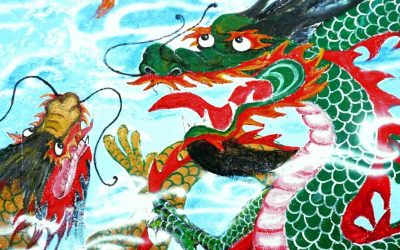
The Dragon in the Chinese Horoscope
The Dragon in the Chinese Horoscope The dragon is the only animal in the Chinese horoscope that has only an imaginary existence, and in fact, in the horoscope of other indigenous peoples of China, it is replaced by another animal. Although the dragon is an imaginary...
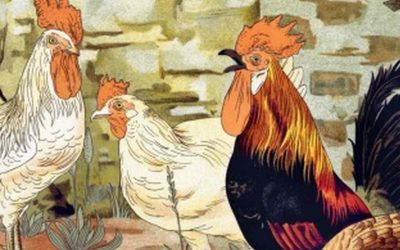
The Rooster in the Chinese horoscope
The Rooster in the Chinese horoscope In Chinese culture, as in many others, the rooster is closely associated with the sun. In some myths it is only in charge of calling the sun to rise every morning, a task in which other animals have failed, in others the rooster is...
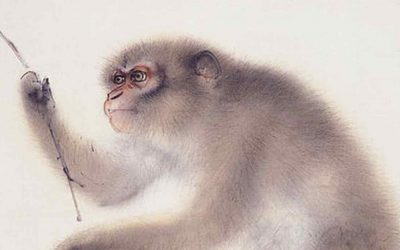
The Monkey in the Chinese Horoscope
The Monkey in the Chinese Horoscope In the Chinese culture the monkey has a role similar to the one that Darwin gives him in the evolutionary scale. As man's younger brother, he participates in many of his qualities, in addition, in many occasions he enjoys the...
Dog in Chinese horoscope
Dog in the Chinese horoscope The dog is one of the most important animals in Chinese culture and is the first of the domestic animals that accompanied the ancestors of the Chinese in their activities on earth. From very early on it played a decisive role in the...
The Tiger in the Chinese horoscope
The Tiger in the Chinese horoscope The tiger is the king of animals for the Chinese, it plays a role similar to that of the lion in the West. It is therefore associated with dignity and power. As well as with a certain benevolent air in dealing with men. It is...
What are four tigers doing in a Chinese Buddhist Temple?
What are four tigers doing in a Chinese Buddhist Temple? After visiting the Yunnan Provincial Museum, with its exuberance of images of tigers and bulls I strolled around in Guandu Old City. The streets were full of people and I entered the Fading Temple to enjoy the...