


The Beauty of Yamdrok Lake
Yamdrok Lake is one of the four most important sacred lakes in Tibet, the one closest to the capital and the most frequently visited. Fan-shaped and opening toward the south, it stretches about 130 km from east to west and 70 km from north to south, covering an area of 638 km². It is the largest lake in southern Tibet. Its depth varies, and it is surrounded by mountains; its shoreline curves into bays and inlets that help create ever-changing landscapes.
A Sacred Lake
Tibetans regard lakes as sacred, just like mountains, as they are believed to be the abodes of protective deities and are therefore endowed with spiritual powers. Yamdrok Lake is believed to possess divinatory powers, which has made it a frequent destination for pilgrims. It is venerated as a talisman and considered part of the vital spirit of the Tibetan people. It is said that if its waters were to dry up, Tibet would no longer be habitable.
On a peninsula extending into the lake stands Samding Monastery, the only Tibetan monastery headed by a female reincarnation. Although it is not a nunnery, its abbess leads a community of around thirty monks and nuns. The monastery is famous as the residence of Dorje Pakmo, the only female lama in Tibet.
A Must-See Destination
Most tour groups traveling to Tibet include a visit to this lake. Travelers with limited time can make a one-day excursion from Lhasa, although it is far more rewarding to follow the entire shoreline along the famous Route 318, on the stretch between Lhasa and Gyantse. Route 318 is one of China’s most renowned highways, a favorite among drivers and motorcyclists. It extends for 5,476 km, running from Shanghai to the Nepalese border.
Highlights
When departing from Lhasa, after crossing the Yarlung Zangbo River, the road gradually climbs through gentle curves that offer constantly changing views, with the river receding farther below. Before reaching the Kamba-la Pass at 4,797 meters, which gives access to the lake basin, there is a viewpoint with spectacular vistas. Local residents often gather there with impressive Tibetan mastiffs and yaks, allowing tourists to take photographs with them.
Soon the first views of the lake appear. Travelers are captivated by its clear blue waters, set against distant snow-covered mountains reflected on the lake’s surface, most notably the perpetually snow-capped Nojin Kangsang peak, rising to 7,191 meters. This landscape, with its subtle variations, accompanies the traveler for much of the route toward Gyantse.
Stops Along the Way
Along the route there are several scenic points where visitors can stop to take photographs, some also offering yaks for a “typical Tibetan” picture. Along the shore lie a few villages that are slowly changing, where people largely continue to lead traditional lives. The lake is also renowned as a habitat for numerous species of migratory birds, and its waters are home to several endemic fish species. Our Tibet itineraries always include a visit to this lake.
About me: I have spent 30 years in China, much of the time traveling and studying this country’s culture. My most popular research focuses on Chinese characters (Chinese Characters: An Easy Learning Method Based on Their Etymology and Evolution), Matriarchy in China (there is a book with this title), and minority cultures (The Naxi of Southwest China).


Last posts
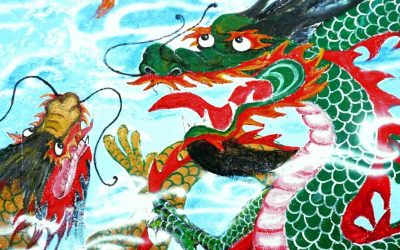
The Dragon in the Chinese Horoscope
The Dragon in the Chinese Horoscope The dragon is the only animal in the Chinese horoscope that has only an imaginary existence, and in fact, in the horoscope of other indigenous peoples of China, it is replaced by another animal. Although the dragon is an imaginary...
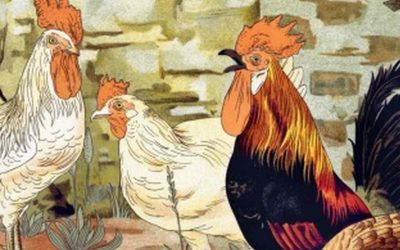
The Rooster in the Chinese horoscope
The Rooster in the Chinese horoscope In Chinese culture, as in many others, the rooster is closely associated with the sun. In some myths it is only in charge of calling the sun to rise every morning, a task in which other animals have failed, in others the rooster is...
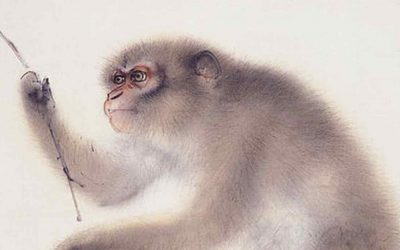
The Monkey in the Chinese Horoscope
The Monkey in the Chinese Horoscope In the Chinese culture the monkey has a role similar to the one that Darwin gives him in the evolutionary scale. As man's younger brother, he participates in many of his qualities, in addition, in many occasions he enjoys the...
Dog in Chinese horoscope
Dog in the Chinese horoscope The dog is one of the most important animals in Chinese culture and is the first of the domestic animals that accompanied the ancestors of the Chinese in their activities on earth. From very early on it played a decisive role in the...
The Tiger in the Chinese horoscope
The Tiger in the Chinese horoscope The tiger is the king of animals for the Chinese, it plays a role similar to that of the lion in the West. It is therefore associated with dignity and power. As well as with a certain benevolent air in dealing with men. It is...
What are four tigers doing in a Chinese Buddhist Temple?
What are four tigers doing in a Chinese Buddhist Temple? After visiting the Yunnan Provincial Museum, with its exuberance of images of tigers and bulls I strolled around in Guandu Old City. The streets were full of people and I entered the Fading Temple to enjoy the...