

From Leyendas de la Diosa Madre. Pedro Ceinos Arcones. Miraguano, 2007.
Anyone who approaches the literature of the minorities of Southern China will discover numerous works where the leading role is played by a female goddess or deity. Whether dedicated to the creation of the world (alone or in the company of a male deity), of the human race, or to the instruction of humanity or its ancestors in the basic notions of Neolithic culture (hunting, agriculture, stock breeding), female deities play a central role in the origin and development of humanity.
In recent times numerous works have been published defending the matriarchal character of a great part of the societies formerly established in the territory of Europe and the Near East, characterized by the cult of a goddess in her diverse manifestations: as a creator of the cosmos and of humanity, as an initiator in the secrets of existence and as a renewer of the world in an alternation of life and death that allows the continuity of everything that exists. This is an issue on which there has been no unanimity among the academic community and instead remains at the centre of a bitter debate with obvious political connotations.
Precisely because it is a subject in permanent debate, and because of the consequences it may have for the present life, I have considered it necessary to provide some facts related to the peoples of China.
My interest in the cultures of China’s minorities led me to learn about the existence of societies, such as the Moso, where inheritance is transmitted through the female line and social life is organized around matrilineal families; that of the Jino, who had female leaders until a few generations ago; that of the Yi, also with numerous female leaders; or that of the Lahu with their manifest gender equality. This series of events led me to wonder whether it would be possible to establish a cultural relationship, at least hypothetical, between the matriarchal societies of the ancient West, and those of the present, or of the near past documented in historical sources, of the Far East, in which women played the predominant role.
Going deeper into the culture of the indigenous peoples of China, I found numerous myths, legends, historical descriptions, rituals, and customs that suggest that in the more or less distant past, women occupied an outstanding social position. Among their myths, I was particularly struck by the many stories that highlight the creating or civilizing role of women, as well as those that describe in detail how women lost the dominant role in their societies.
As I discovered new myths that reinforced the role of women in China’s indigenous societies, my desire to find others like them in different social systems grew. As a result of this somewhat obsessive research, I ended up gathering together an interesting treasure trove of narratives that, encompassing the peoples inhabiting in different regions of China, make women the protagonists of history. Thus, what was initially only part of an effort to document the position of women in the societies of minorities, which should also include rituals, customs, and historical descriptions, took on such a volume that I felt it appropriate to translate and present these myths, with enormous interest in themselves, while continuing to investigate the traces of these ancient Chinese matriarchal societies in the minorities cultures of modern China.
By temporarily abandoning my research on Chinese matriarchy and replacing it with the translation of these myths, I realized that the interest in these narratives is multi-faceted: first, because they present the reader with a series of stories, most of which have never been translated into any Western language; second, because they make it possible to know some of the most common motives in the mythologies of the peoples of China (creation of the world, flooding, marriage of brothers, appearance of numerous suns, etc.); third, because they cover geographical regions so far away as to suggest the validity, at least for East Asia, of their subject matter; fourthly, due to their homogeneity in the positive treatment of the female deities which contrasts with other mythical narratives where they play a permanently negative role, and lastly because in a society which still stands on a framework that is tremendously hostile towards women, with tragic results on numerous occasions. Any work aimed at claiming their importance can become a drop in the great tide destined to reverse the present situation.
This work is not extensive, the narrations presented here can hardly be considered a small sample of the vast feminine mythology of the peoples of China. There are many myths that have been left out: either because they are too long, because they are too similar to some of the myths included, or because due to their complex symbolic language they would be difficult to understand for the general reader.
More posts on Chinese culture
The Dragon in the Chinese Horoscope
The Dragon in the Chinese Horoscope The dragon is the only animal in the Chinese horoscope that has only an imaginary existence, and in fact, in the horoscope of other indigenous peoples of China, it is replaced by another animal. Although the dragon is an imaginary...
The Rooster in the Chinese horoscope
The Rooster in the Chinese horoscope In Chinese culture, as in many others, the rooster is closely associated with the sun. In some myths it is only in charge of calling the sun to rise every morning, a task in which other animals have failed, in others the rooster is...
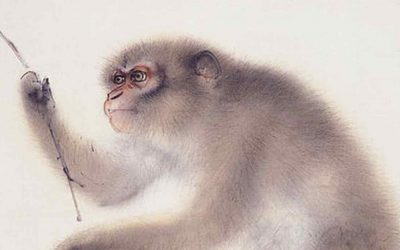
The Monkey in the Chinese Horoscope
The Monkey in the Chinese Horoscope In the Chinese culture the monkey has a role similar to the one that Darwin gives him in the evolutionary scale. As man's younger brother, he participates in many of his qualities, in addition, in many occasions he enjoys the...
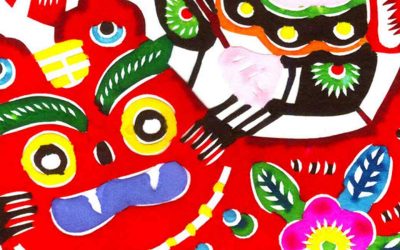
Dog in Chinese horoscope
Dog in the Chinese horoscope The dog is one of the most important animals in Chinese culture and is the first of the domestic animals that accompanied the ancestors of the Chinese in their activities on earth. From very early on it played a decisive role in the...
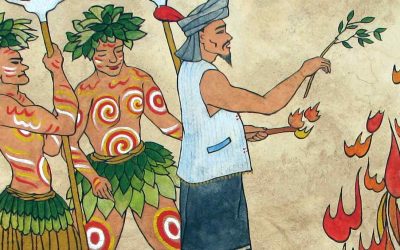
The Tiger in the Chinese horoscope
The Tiger in the Chinese horoscope The tiger is the king of animals for the Chinese, it plays a role similar to that of the lion in the West. It is therefore associated with dignity and power. As well as with a certain benevolent air in dealing with men. It is...
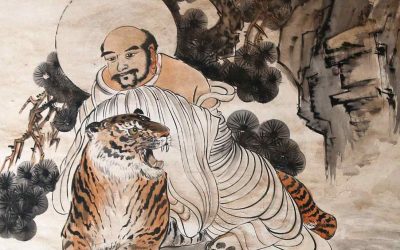
What are four tigers doing in a Chinese Buddhist Temple?
What are four tigers doing in a Chinese Buddhist Temple? After visiting the Yunnan Provincial Museum, with its exuberance of images of tigers and bulls I strolled around in Guandu Old City. The streets were full of people and I entered the Fading Temple to enjoy the...
More posts on China ethnic groups

The wonderful culture of the Jinuo
Hidden in the tropical mountains of China’s southern border lives one of its most interesting minorities: The Jino nationality. With a population of only 21,000 people they are one of the less known ethnic groups in China, who in the past were often confused with the...

Introducing the Dong nationality
The Dong are one of the minorities of China with a large population. According to the census of the year 2000 their population was 3,000,000 people. They live mainly in Guizhou Province (approximately 1,800,000 people), along a fringe of flat lands that cross the...
The Dai of Dehong Prefecture
Santasombat, Yos. Lak Chang: A Reconstruction of Tai Identity in Daikong. Canberra, AUS: Pandanus Books, 2001. p 1. (Introduction) The Tai ethnic group, in its different branches, is beyond any doubt one of the most widespread of any ethnic group in the Southeast...
The sacred forests of the Dai
The sacred forests of the Dai: Protecting the ancestors - protecting nature. Among the indigenous peoples that inhabit the south of China, there are a good number that have near their villages a small grove that they consider sacred. Usually they believe that this...