


Zhuang phallic ritual
Zhuang minority has an interesting phallic ceremony. According to their legends, in antique times there was no communication between the two banks of the Hongshui River, women living on one bank of the river and men on the other. The god Buluotou stretched out his big and long sex over the river, making a celestial bridge. Thanks to this bridge the people crossed the river, and they mated making the first families, and humanity propagated.
When the god become old and the bridge turned soft, he removed the bridge leaving two pubic hairs that turned in two ways, masculine and feminine, making a bridge of men and women, where the people met in joy.
Every year, in the days following the New Year Festival, local people gather in the two banks of Hongshui River to celebrate a festival honoring Buluotou’s sex. They sacrifice an ox and a cow to Buluotou, provided by the people living on the two banks of the river. Images of the sex of the god are hung everywhere, usually as a paper sail, that the wind can blow as in the penis of the god have an erection.
Zhuang people eat and drink, the young people sing love songs. During the festival, they honor also their goddess Miliujia, as they consider that both she and Buluotou together created human beings. In the last 30 years, the sacrifice of the ox and cow were stopped, but not the festival atmosphere and the singing gathering.


Last posts
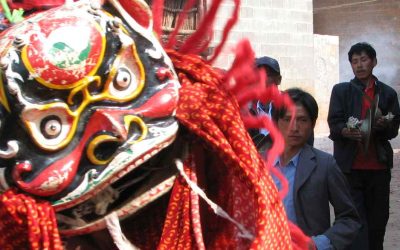
THE LION-DANCE AS RELIGIOUS DANCE
THE LION-DANCE AS RELIGIOUS DANCE The lion-dancers first appeared in China under the Tang dynasty (a.d. 618-906), and made their debut at the court of the kings of Tibet about the same time. The lion-dancer represents a form of the Indian mime or burlesque juggler,...

The Flowery Miao in Zhaotong
The Flowery Miao in Zhaotong As depicted by E. G. KEMP in The Face of China. New York. 1909. The prefectural town of Zhaotong was reached after passing through a dull plain, across which a piercing wind was blowing, which is characteristic of this district. It is an...
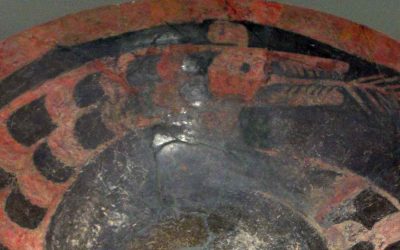
Taosi. The first capital of China
Taosi. The first capital of China Taosi is one of the most important archaeological discoveries in China in the past decades. Located in the southern part of Shanxi province, is possibly the first urban center emerged in China. The excavation of the ancient city of...