


The Wenzi Begins: Echoes from a Forgotten Taoist Voice
The Wenzi (文子) is an ancient Daoist text attributed to a disciple of Laozi. Although its authenticity has been debated throughout history, its content clearly reflects the Daoist worldview and its influence on the natural order, politics, and everyday life. This opening passage of the work, deeply poetic and philosophical, expresses the ineffable nature of the Dao and its power to generate and harmonize all aspects of the universe. Through imagery evoking primordial chaos, non-action, and the unity of opposites, the text invites an intuitive and vital understanding of the world. Here we present a modern translation intended for contemporary readers.
Laozi said:
“There is a thing, born from chaos, before Heaven and Earth. It has the semblance of form but no shape. Deep, dark, silent, still, without sound. I force myself to give it a name: I call it Dao.
Dao is so high it cannot be reached, so deep it cannot be fathomed. It enfolds Heaven and Earth, receives form from the formless, flows endlessly yet never fills. Murky, it slowly clears through stillness. It can be applied without end, without regard to morning or evening.
Its appearance does not fill a handful, but when constrained, it stretches; when hidden, it shines; when soft, it becomes strong. It contains the yin and exhales the yang, and from it emerge the three celestial lights.
Mountains are tall because of it, abysses deep because of it, beasts run, birds fly, the qilin roams and the phoenix soars, and the stars and the calendar move by its law. From death it draws life, from lowliness it takes nobility, from withdrawal it brings precedence.
In ancient times, the Three Emperors attained the unity of Dao and stood at the center. Their spirit moved and transformed, embracing all directions. Thus, they moved with Heaven and Earth in perfect harmony: cycles turned without end, waters flowed without rest, things were joined from beginning to end. Wind stirred, clouds rose, thunder sounded, and rain fell — all responding without exhaustion. All that is carved and polished returns to simplicity.
To act without acting aligns with life and death. To speak without striving leads to virtue. Serenity and joy without pride bring harmony. A thousand differences all find their ease in life.
Dao harmonizes yin and yang, regulates the four seasons, balances the five elements, nourishes grasses and trees, seeps into metals and stones. Birds and beasts grow great, their hair and feathers glossy. Bird eggs do not rot, beast embryos do not die. Fathers do not mourn sons, brothers do not grieve for brothers. Children are not orphaned, women are not widowed. No rainbows are seen, no thieves appear. These are the fruits of virtue.
The Way of the Great Constant brings forth all things without possessing them, completes their transformation without controlling them. All beings rely on it to live, yet do not know its virtue. They rely on it to die, yet cannot resent it. What is stored and accumulated does not lead to wealth. What is given and received does not lead to poverty.
Suddenly, indistinctly, it cannot be represented. Faintly, swiftly, it is inexhaustible in use. Deep and obscure, it responds to transformation without form. It moves forth, it flows freely, never moves in vain. It embraces both firm and yielding, rises and bows with yin and yang.”
Original text: https://ctext.org/wenzi/dao-yuan
About me: I have spent 30 years in China, much of the time traveling and studying this country’s culture. My most popular research focuses on Chinese characters (Chinese Characters: An Easy Learning Method Based on Their Etymology and Evolution), Matriarchy in China (there is a book with this title), and minority cultures (The Naxi of Southwest China). In my travels, I have specialized in Yunnan, Tibet, the Silk Road, and other lesser-known places. Feel free to write to me if you’re planning a trip to China. The agency I collaborate with offers excellent service at an unbeatable price. You’ll find my email below.


Last posts

Chinese character for «snake»
Chinese character for "snake” The Chinese character to represent the snake has undergone over the centuries a curious evolution that, although seen from the cultural perspective of the XXI century may seem strange, it will not be so much if we remember the symbolism...
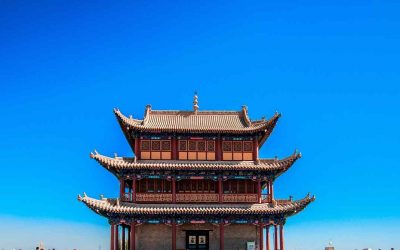
Jiayuguan Pass – the Great Wall on the Silk Road
Jiayuguan Pass - the Great Wall on the Silk Road Jiayuguan Pass or Jiayu Pass, as guan means pass in Chinese is one of the most remarkable monuments on the Silk Road and one of its most popular sights. Built at the end of the Great Wall, showing the desolation of the...

Springtime in a Small Town: The best film in China’s history
Springtime in a Small Town: The best film in China's history All the rankings made in recent years, place a film, unknown to the general public, as the best film in China. It is called "Springtime in a Small Town" and was directed by Fei Mu in 1948. I had been wanting...
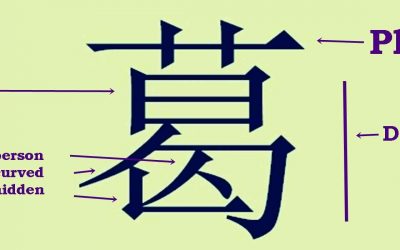
The Kudzu vine, a necessary plant
The Kudzu vine, a necessary plant. In the last edition of my book on Chinese characters I explained the character 葛 as follows: gé - kudzu vine. A plant 艹 asked 曷 for its beneficial properties and for its use in making clothes. And in turn曷 is explained: hé - how,...
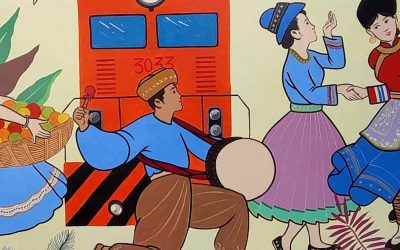
The Character and Function of Music in Chinese Culture
The Character and Function of Music in Chinese Culture In 1946 Bliss Wiant finished his Doctoral dissertation . The subject was “The character and function of Music in Chinese culture.” Some of his reflections are so interesting that I share with readers here some...

Life of Milarepa, the hermit poet
Life of Milarepa, the hermit poet. MiIarepa is one of the most beloved religious leaders of Tibet. His story, full of unique facts, has been told again and again over the centuries, and if the publishers did not warn that this is the autobiography written by the holy...