


The Tibetan Deity with a Horse Face
During my most recent journey to Tibet, someone pointed out to me in a temple a deity who bore a small horse upon his head. I knew that this protector is called Hayagriva, and that he is sometimes referred to as “Horse-Headed” or “Horse-Necked,” but I knew little else about him. After all, the narratives, iconography, and cults of Tibetan protectors can at times appear rather similar. After studying the subject more closely, it becomes clear that Hayagriva is in fact a highly important wrathful deity within Tibetan Vajrayāna Buddhism. Indeed, many years ago he was already the subject of one of the earliest scholarly studies devoted to Tibetan protective deities. He is regarded as a fierce manifestation of Avalokiteśvara (Chenrezig), the bodhisattva of compassion, and sometimes of Amitābha (the Ādi-Buddha of the Lotus family). His terrifying appearance symbolizes active compassion that destroys obstacles, demons, and negativities in order to protect the Dharma and its practitioners.
History and Origins
Hayagriva has roots in ancient India, where he initially functioned as a yakṣa attendant (a protective spirit) of Avalokiteśvara in early Mahāyāna Buddhism. Influenced by pre-Buddhist horse cults—where the horse symbolized speed, power, and wisdom—he evolved within Vajrayāna tantrism (eighth to eleventh centuries) into a principal deity, both as a yidam (meditational deity) and as a dharmapāla (protector of the Dharma).
In Tibet
In Tibet, his cult was especially promoted by the Indian master Atiśa (eleventh century), who introduced him as a protector. Hayagriva was incorporated into all Tibetan Buddhist schools (Nyingma, Kagyu, Sakya, and Gelug), with practices revealed through concealed treasures (terma). Tibetans refer to him as the “Horse Protector,” since the neighing of the horse head that emerges from his crown is believed to drive away demons. He was also venerated by horse traders seeking protection. His association with horses reflects Tibetan nomadic culture, in which these animals are essential.
The Legend of the Horse that Entered through the Anus
His most famous legend recounts the subjugation of the demon Rudra (or Maheśvara), an arrogant being who had subdued the gods and threatened the Dharma. At that critical moment, Avalokiteśvara transformed into Hayagriva in order to defeat him. Together with his consort Vajravārāhī (Dorje Phagmo), Hayagriva performed nine wrathful dances and engaged in fierce battles against Rudra. He ultimately shrank, entered Rudra through the anus, expanded within him, and destroyed him from the inside. This destruction affected only the evil within Rudra, who, once purified, vowed to become a protector of the Dharma. Having fulfilled his mission, Hayagriva emerged bearing a horse’s head, through Rudra’s skull. This narrative symbolizes the transformation of anger and ego into enlightened compassion.
Other legends associate him with the healing of diseases—especially skin diseases such as leprosy, attributed to nāgas or serpent spirits—and with protection against disturbances caused by local earth spirits. For this reason, Tibetans traditionally avoid excavations that might offend such beings, invoking Hayagriva to subjugate them.
Forms and Practice
Hayagriva is a wrathful deity with highly varied forms—traditionally said to number 108. One form is specifically called “Most Secret” (Yangsang) and is regarded as his most esoteric manifestation. It is the most widely practiced, especially within the Gelugpa school of the “Yellow Hats.” In other representations he appears red in color, winged, with multiple arms (often six), multiple faces (three or more), and green horse heads neighing from his flaming crown. He is generally depicted trampling nāgas or corpses, symbolizing victory over obstacles.
His practices appear to be intended primarily for monks and practitioners with advanced religious training. They include visualizations in which one identifies with Hayagriva in order to generate compassionate power, mantras to invoke his protection, rites for purification and the elimination of negativities, and prolonged retreats to overcome both internal and external obstacles.
In sum, although Hayagriva is one of the most easily recognizable protectors due to the horse head or entire horse emerging from his crown, he is also among the most difficult to understand, since his most common forms are the most esoteric.
About me: I have spent 30 years in China, much of the time traveling and studying this country’s culture. My most popular research focuses on Chinese characters (Chinese Characters: An Easy Learning Method Based on Their Etymology and Evolution), Matriarchy in China (there is a book with this title), and minority cultures (The Naxi of Southwest China).


Last posts

A Woman, a Gun and a Noodle Shop
A Woman, a Gun and a Noodle Shop Directed by Zhang Yimou: 2009. 85. Min. A Woman and a Gun and a Chinese Noodle House is a quite singular work within Zhang Yimou's filmography. His light-hearted style starts from the first scenes, in which we see the protagonist with...
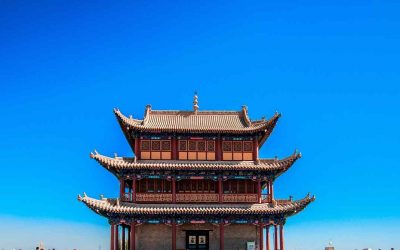
Jiayuguan Pass – the Great Wall on the Silk Road
Jiayuguan Pass - the Great Wall on the Silk Road Jiayuguan Pass or Jiayu Pass, as guan means pass in Chinese is one of the most remarkable monuments on the Silk Road and one of its most popular sights. Built at the end of the Great Wall, showing the desolation of the...

Springtime in a Small Town: The best film in China’s history
Springtime in a Small Town: The best film in China's history All the rankings made in recent years, place a film, unknown to the general public, as the best film in China. It is called "Springtime in a Small Town" and was directed by Fei Mu in 1948. I had been wanting...
The Character and Function of Music in Chinese Culture
The Character and Function of Music in Chinese Culture In 1946 Bliss Wiant finished his Doctoral dissertation . The subject was “The character and function of Music in Chinese culture.” Some of his reflections are so interesting that I share with readers here some...

History of Dunhuang, crossroads of cultures on the Silk Road
History of Dunhuang, crossroads of cultures on the Silk Road Dunhuang is one of the most fascinating cities on the Silk Road, although it now appears to be asleep, in the sleep that the improvement of communications in recent centuries has brought to the great...

Kyzil Grottoes – Primitive Buddhist art on the Silk Road
The Kyzil Grottoes - Primitive Buddhist art on the Silk Road The Kizil Grottoes are located on the cliffs of Minya Dag Mountain facing the Muzhati River, 7 km southeast of Kizil Township, Baicheng County, and about forty-three kilometers west of present-day Kucha,...