


Chinese Herbal Medicine Shop in Weishan, Yunnan
China still maintains a strong tradition of using natural medicines, specifically herbs with medicinal properties that have been used for centuries. In addition to being present in the composition of many modern medications, some herbalists continue their traditional trade. Even in large cities, it is not uncommon to occasionally find herbalists selling fifteen or twenty products in their small stall or shop, each stored in a plastic bag. Usually, these products do not have labels, meaning that only an expert knows exactly what each medicine is.
Herbal medicine shop
In this shop, located in the ancient city of Weishan in Yunnan province, we find what could be described as the pinnacle of Chinese herbal medicine. Within this traditional house on the main street of the old town, we discover a unique display of medicinal herbs. On the left, some medicines are neatly arranged in white plastic bags, this time identified with small labels. Higher up, in a small nod to modern civilization, others are carefully placed in plastic bottles.
A unique shop in China
However, what makes this shop stand out from all the other similar stores and stalls across China is the sheer volume of herbs stored in the white and green sacks seen on the right side of the image. It is well known that each medicinal herb must be harvested at a specific time of the year and that many of these herbs are needed in large quantities to be therapeutically effective. The foresight of this traditional pharmacist creates a truly unique scene in the ancient city of Weishan.
Wonderful Weishan Old City
Weishan is one of the oldest cities in Yunnan province. Officially designated as an autonomous district for the Yi and Muslim communities within the Bai Autonomous Prefecture of Dali, Weishan boasts significant historical, artistic, and cultural attractions. Among them, the Ancient City, with thousands of well-preserved buildings, and Weibaoshan Mountain, located 10 km from the city, stand out as the most important Taoist mountain in Yunnan.
This is why we include this city in almost all of our itineraries in Yunnan.


Last posts
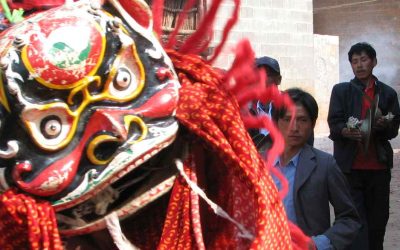
THE LION-DANCE AS RELIGIOUS DANCE
THE LION-DANCE AS RELIGIOUS DANCE The lion-dancers first appeared in China under the Tang dynasty (a.d. 618-906), and made their debut at the court of the kings of Tibet about the same time. The lion-dancer represents a form of the Indian mime or burlesque juggler,...
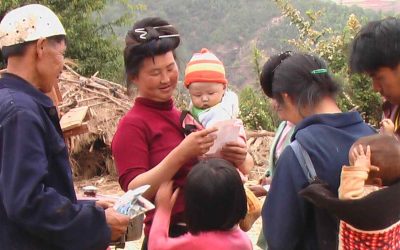
The Flowery Miao in Zhaotong
The Flowery Miao in Zhaotong As depicted by E. G. KEMP in The Face of China. New York. 1909. The prefectural town of Zhaotong was reached after passing through a dull plain, across which a piercing wind was blowing, which is characteristic of this district. It is an...
Taosi. The first capital of China
Taosi. The first capital of China Taosi is one of the most important archaeological discoveries in China in the past decades. Located in the southern part of Shanxi province, is possibly the first urban center emerged in China. The excavation of the ancient city of...

Chinese character 疚 jiù – chronic disease
Chinese character 疚 jiù – chronic disease 1. chronic disease. 2. remorse. HSK - STROKES - 8 RADICAL - 疒 Elements ---- Illnes radical 疒 + long time 久. Phonetic series 久. It causes pain 疒 for long time 久. 内疚 nèijiù – remorse (inner + remorse) 疚心 jiùxīn – ashamed...
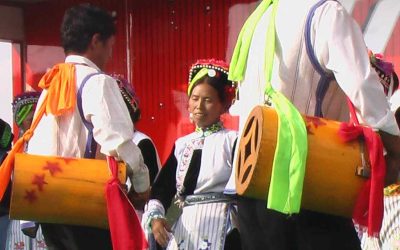
The Flood Myth, Shamans and the Sani Religion
The Flood Myth, Shamans and the Sani Religion We continue with the second chapter of Paul Vial “Los Lolos”, in which fragments dedicated to the myth of the flood and the activities of its shamans are particularly striking. CHAPTER II - RELIGIOUS TRADITIONS These...
There was a matriarchy among the Yugur?
There was a matriarchy among the Yugur? The matrimonial customs of the Yugur present differences between their two main groups. Among the Eastern Yugur, girls had a time of great sexual freedom. Their rite of passage was the ceremony of making the headdress, which was...