


Why It Is Necessary to Study Suicide in Chinese Culture
While drafting new chapters for my Brief History of China, cases of suicide kept appearing in the most diverse circumstances. Ministers and wives who allowed themselves to be buried alive to accompany kings to the next world; generals who took their own lives to avoid the humiliation of defeat; officials who did so to show the sincerity of their political convictions; Buddhist monks who immolated themselves as an ultimate sacrifice, freeing themselves from the body that prevented them from reaching nirvana; women who killed themselves in fear of being raped during military campaigns; widows who ended their lives rather than remarry; and desperate citizens—labeled political enemies—who committed suicide amid the violence that followed the establishment of the communist regime in the twentieth century. Most of these stories reflect traditional Chinese culture and show that the motives, the social perception, the settings, and even the methods of suicide were deeply shaped by this country’s history.
To my surprise, when I continued researching out of curiosity, I found no comprehensive work on the subject. Only a handful of books and academic studies have been dedicated to widow suicides during the last dynasty or to the self-immolation of Buddhist monks in medieval China, but none describe and analyze suicide across the broad spectrum of Chinese history and culture. There are studies emphasizing its importance in religion, history, and culture, exploring the meaning of life and death in different historical periods and under various philosophical or religious systems, but none that bring all this information together in a single volume. Over a century ago, J.J. Matignon (1936:61), who devoted much of his book to suicide, already noted: “One could write a considerable volume on suicide in China, for there is probably no country where this crime is more frequent. It is found in all classes and at all ages.”
Materials related to the study of suicide also provide alternative views of key concepts in Chinese thought or highlight details usually overlooked. Through them we better understand loyalty to the sovereign or to one’s husband, ritual sacrifices for rain, violent death as a path to deification, the drama of gender-based violence, Daoist techniques of self-destruction, and Buddhist practices of self-immolation. Above all, they shed light on the atmosphere that led millions to sacrifice their own lives for their ideals, for the good of the people, to preserve a good name, or to escape suffering.
Studying suicide in China is a complex task, covering nearly 4,000 years and enormously varied situations. Yet it is also a fascinating process, offering the researcher (and the reader) fresh and thought-provoking interpretations of history and society, new angles from which to understand religion, and overlooked data that open new windows onto the lives of those who shaped history. Each facet of suicide raises more questions than answers, creating new fields for cultural inquiry. For this reason, my aim in this book has been to place historical events related to suicide within the religious and cultural frameworks that help explain them, giving readers the tools to understand why people took their own lives in different historical and social contexts. But books have a life of their own and sometimes chart their own course. This is one such case, and I could not ignore the evidence presented by my own research: it became necessary to explain how Chinese attitudes toward suicide became one of the decisive factors in the fall of the Qing dynasty—and with it the imperial system.
Historians, as well as specialists in religion and society, will find in the study of suicide new perspectives from which to examine their subjects, illuminating archaeology, art, literature, and ritual life, all of which were shaped by these acts. Scholars of Chinese religions already know that violent death—whether in war or through suicide—was central to the creation of dangerous spirits or ghosts who, unlike deceased family members who become protective ancestors, roam the world and can bring disaster to the living. The struggle against these spirits is at the heart of Chinese religious life.
If this topic interests you, I recommend my book The Culture of Suicide in China and the Fall of the Imperial Regime (La cultura del suicidio en China y la caída del régimen imperial)
About me: I have spent 30 years in China, much of the time traveling and studying this country’s culture. My most popular research focuses on Chinese characters (Chinese Characters: An Easy Learning Method Based on Their Etymology and Evolution), Matriarchy in China (there is a book with this title), and minority cultures (The Naxi of Southwest China). In my travels, I have specialized in Yunnan, Tibet, the Silk Road, and other lesser-known places. Feel free to write to me if you’re planning a trip to China. The agency I collaborate with offers excellent service at an unbeatable price. You’ll find my email below.


Last posts
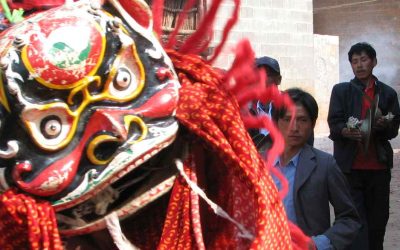
THE LION-DANCE AS RELIGIOUS DANCE
THE LION-DANCE AS RELIGIOUS DANCE The lion-dancers first appeared in China under the Tang dynasty (a.d. 618-906), and made their debut at the court of the kings of Tibet about the same time. The lion-dancer represents a form of the Indian mime or burlesque juggler,...
Taosi. The first capital of China
Taosi. The first capital of China Taosi is one of the most important archaeological discoveries in China in the past decades. Located in the southern part of Shanxi province, is possibly the first urban center emerged in China. The excavation of the ancient city of...
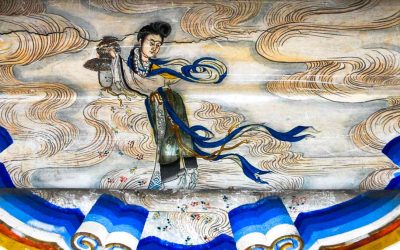
Who is this Goddess of Heaven scattering flowers?
Who is this Goddess of Heaven scattering flowers? When we arrive in a country with a culture as different as China, it is as if a fog blanket covers our eyes, allowing us only a blurred vision of everything around us. Then we recognize the characters in their writing...
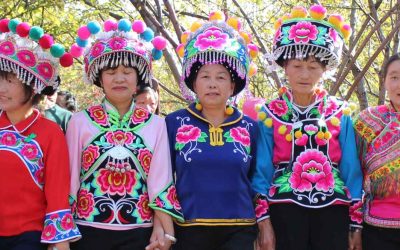
Why do you must visit a Chinese park?
Why do you must visit a Chinese park? Many experienced travelers to China include in their programs the visit a neighborhood market thinking that the essence of the culture of the people is concentrated there. And they have their point, but not only in the market you...
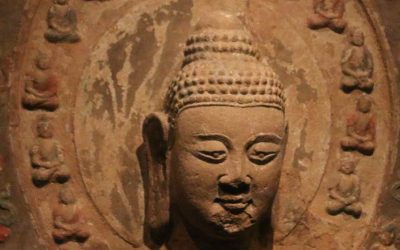
The most beautiful Buddhist sculpture in Beijing
The most beautiful Buddhist sculpture in Beijing It is the "Stone sculpture of the Sakyamuni Buddha with two guardians", which is in the Capital Museum of Beijing. It is dated in the Northern Wei Dynasty, in the 23rd year of the Emperor Taihe (499 AD) This statue is...
Violence and cannibalism in the Five Dynasties
l l Violence and cannibalism in the Five Dynasties When one begins to know the history of China, one concentrates its readings on its brilliant moments, on those great dynasties that expanded the territory, recreated surprising cultural forms and became the greatest...