


Tiger Leaping Gorge: a 3,000-meter drop into the Yangtze River
The Yangtze River is the longest river in China and, at 6,300 km, the third longest in the world. It is China’s vital artery, flowing from its source on the Tibetan Plateau across the country’s central regions until it empties into the East China Sea just north of Shanghai. Its course through Yunnan is particularly dramatic. Entering the northwest of the province and flowing south, the Yangtze runs for several dozen kilometers parallel to the Mekong (Lancang in Chinese) and the Salween, forming unique ecosystems now protected within the UNESCO-listed Three Parallel Rivers National Park (云南三江并流).
At the town of Shigu, the Yangtze meets an impenetrable mountain wall and performs a 135-degree turn, redirecting its flow northward. A few kilometers later, its new course is blocked again—this time by two of Yunnan’s most formidable peaks: Haba Mountain and Jade Dragon Snow Mountain. The river forces its way between them. Its channel, relatively stable after its first great bend, narrows abruptly until it is reduced to barely twenty meters. At its narrowest point the two banks are so close that, as local legend says, even a tiger could leap across—hence the name Tiger Leaping Gorge. With a vertical drop of nearly 3,900 meters from the surrounding mountaintops down to the river, it is one of the deepest gorges in the world.
There are several ways to admire this extraordinary canyon.
The eastern trail—still under the administrative jurisdiction of Lijiang—is the least interesting and was opened to tourism only recently. Visibility is poor and it is not recommended.
The western trail, on the Shangri-La side, offers far superior panoramic views from the lookout platforms near the parking area, where one can see the river tightening between the mountains until it reaches its narrowest point.
Visitors can also descend to the riverbank via a succession of stairways and viewing platforms offering different perspectives of the river, the mountains, and the gorge. At the lowest point, several platforms—one with a glass floor—allow you to stare straight down at the narrowest stretch of the river, feeling almost suspended above it. The roar of the churning water is overwhelming. This is the most touristy section, now even equipped with escalators, but despite the crowds there is always a quiet corner from which to contemplate the river undisturbed.
But that is only the beginning. The entire Tiger Leaping Gorge is 16 km long. After enjoying its narrowest point, a short 25-minute drive takes you to the Middle Gorge (中虎跳峡), where the scenery becomes even more imposing: enormous cliffs that plunge vertically for over a thousand meters in some sections. Several viewpoints along the way offer new panoramas, this time looking downriver as it carves its way through the mountains. Restaurants and guesthouses with spectacular views are gradually appearing along this stretch.
At the area known as Middle Tiger Leaping Gorge, a small parking lot receives local buses, and there are at least three hotels with restaurants. One of them, the Café on the Tiger Leaping Gorge, has a huge glass wall with breathtaking views—expensive, but always full of young travelers taking photos in this magical spot. The ground floor houses a good restaurant, and the back area operates as a guesthouse.
Across the parking area there is another hotel and restaurant, also with great views and good food. Higher up the mountain stands the Tina Guesthouse, the endpoint of the easiest trek in the area. Even travelers who only want a short walk will find that after a gentle, safe 15-minute ascent the landscape becomes spectacular—a highly recommended experience.
More demanding treks traverse the entire gorge and require at least two days on each of its major sections. A guide is recommended. Those starting from Lijiang usually finish in Daju, a beautiful Naxi village surrounded by towering mountains, with several pleasant and peaceful guesthouses. From Daju you can cross the Yangtze by boat and continue on toward Haba and Baishuitai. The crossing is performed by two large ferries which, though sometimes uncomfortable or even unsafe, see little traffic. I crossed alone in May. In theory there is a boat at 11 a.m., but they will usually take you across whenever someone shows up. On both sides of the river, it takes about a half hour on foot to reach the nearest village.
There are treks for every taste: the mountains are majestic. Some travelers stay high on the cliffs and take multiple hikes along the trails carved into the slopes; others choose shorter walks ending at the Middle Gorge. Those lodged in the guesthouses mentioned above often make daily excursions to various viewpoints.
All our Yunnan tours include ample time to enjoy this natural wonder, usually stopping for lunch in the Middle Gorge area.
Come discover Yunnan with us!
If you’re interested in Yunnan, you might also enjoy these books:
About me: I have spent 30 years in China, much of the time traveling and studying this country’s culture. My most popular research focuses on Chinese characters (Chinese Characters: An Easy Learning Method Based on Their Etymology and Evolution), Matriarchy in China (there is a book with this title), and minority cultures (The Naxi of Southwest China). In my travels, I have specialized in Yunnan, Tibet, the Silk Road, and other lesser-known places. Feel free to write to me if you’re planning a trip to China. The agency I collaborate with offers excellent service at an unbeatable price. You’ll find my email below.


Last posts

Zhang Yongzheng, the master of deluding reality
Zhang Yongzheng, the master of deluding reality Reality is an illusion, say Buddhist texts. And each of Zhang Yonggzheng's (Gansu, 1978) works plays with this concept to remind us again and again that there is no immutable reality but a fluid universe of forms that...

The book Hanzi for HSK 1-3 now available in Greek language
The book “Hanzi for HSK 1-3” now available in Greek language This April, the translation of my book Hanzi for HSK 1-3 has been published in the main digital bookstores in Greece. The Greek version of this book, from the pen of Stefanos Karampalis, has been one of...

Portrait of a Mandarin in 1800
Portrait of a Mandarin in 1800 This was the year in which a very interesting book was published, which through 60 portraits, tried to show some aspects of life in China to the western public. A book now in the public domain, from which we adapted "A Mandarin of...

The art of laying out gardens among the Chinese
The art of laying out gardens among the Chinese In the 1740s, William Chambers travelled on three trading voyages to China with the Swedish East India Company. He was the first European to study Chinese architecture methodically. In a book published in 1757, Designs...

The secret treasure of ancient Chinese art
The secret treasure of ancient Chinese art China has a fabulous artistic treasure hidden from the eyes of the public and specialists. It is her best kept treasure, because given the dispersion of its location, the difficulty of conservation and even evaluation and...
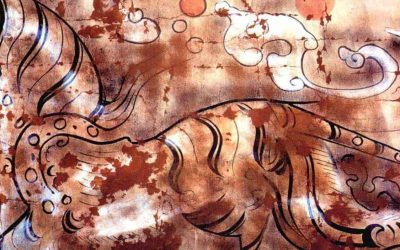
2,000-year-old paintings in a Chinese tomb
2,000-year-old paintings in a Chinese tomb It has been more than 10 years since the publication of The complete collection of murals unearthed in China, a dozen or so books describing with abundant full-color photographs the frescoes discovered in Chinese tombs....