


The truth about the Great Wall
What would later come to be known as the Great Wall formed as a response to increased Mongol raiding after Esen was killed in 1455. Having failed to capitalize on the capture of Zhengtong, Esen lost the political momentum that had held the disparate Mongol groups together. The ensuing civil war spread into Chinese territory as warring factions sought economic resources to support their military efforts. One faction moved into the Ordos region, now no longer supervised by a Ming garrison, placing the Mongols squarely against Ming territory. The Mongols still wanted to present tribute, and receive gifts in return, and to trade with the Ming; failing that, they raided. Meanwhile, the Ming court was Itself distracted by Zhengtong’s return to power in a coup d’état in 1457. Jingtai died of illness or was poisoned, and Zhengtong resumed as emperor with a new reign period: Tianshun.
It was difficult to establish a consistent policy toward the Mongols given their ongoing wars, a situation further exacerbated by Tianshun’s weak leadership. A proposal to launch a campaign to retake the Ordos and establish garrisons, fortified positions, and agriculture, and so maintain control of the area, was approved, but nothing came of it. Further proposals for offensive action were sanctioned and left unfulfilled. In the interim, some commanders suggested pulling back to more hilly areas to the south that were easier to defend. This too was rejected. In 1471, Yu Zijun submitted a plan to build wall between Yansui and Qingyang to aid in defense.
A wall-based defense was expensive to construct and of questionable effectiveness. Yet the court did not have the will to devote the economic and military resources necessary to launch its desired offensive. Wall building won out because it was cheaper than any offensive; the first two long walls were finished in 1474, one 129 miles long and the other 566 miles long. Over the next century more and more walls were built; in many places there were actually two lines, with forts and watchtowers, evolving into what we now know of as the Great Wall. Although the walls were useful, they were never intended as a complete solution to the Mongol problem. The difficulty was that the same economic, political and military problems continued to obtain, leading successive generations through the same debate that put additional resources into wall building. The short-term question was how to make the wall system more effective, since the long-term problem of the Mongols could not, apparently, be solved.
Peter Lorte. War, Politics and Society in Early Modern China 900-1795. Routledge. London and New York. 2005. P. 124
About me: I have spent 30 years in China, much of the time traveling and studying this country’s culture. My most popular research focuses on Chinese characters (Chinese Characters: An Easy Learning Method Based on Their Etymology and Evolution), Matriarchy in China (there is a book with this title), and minority cultures (The Naxi of Southwest China). In my travels, I have specialized in Yunnan, Tibet, the Silk Road, and other lesser-known places. Feel free to write to me if you’re planning a trip to China. The agency I collaborate with offers excellent service at an unbeatable price. You’ll find my email below.


Last posts

Cold Steel – A Sniper’s War
Cold Steel - A Sniper's War If in the West war films are a genre in their own right, in China they are an even more important genre, and that is because there is always an interest on the part of the official media to remember the two great war events that gave rise...

A Woman, a Gun and a Noodle Shop
A Woman, a Gun and a Noodle Shop Directed by Zhang Yimou: 2009. 85. Min. A Woman and a Gun and a Chinese Noodle House is a quite singular work within Zhang Yimou's filmography. His light-hearted style starts from the first scenes, in which we see the protagonist with...
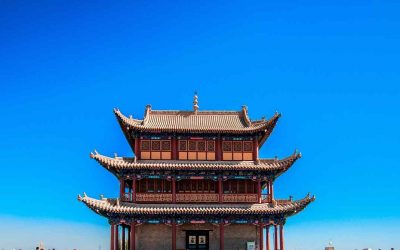
Jiayuguan Pass – the Great Wall on the Silk Road
Jiayuguan Pass - the Great Wall on the Silk Road Jiayuguan Pass or Jiayu Pass, as guan means pass in Chinese is one of the most remarkable monuments on the Silk Road and one of its most popular sights. Built at the end of the Great Wall, showing the desolation of the...

Springtime in a Small Town: The best film in China’s history
Springtime in a Small Town: The best film in China's history All the rankings made in recent years, place a film, unknown to the general public, as the best film in China. It is called "Springtime in a Small Town" and was directed by Fei Mu in 1948. I had been wanting...
The Character and Function of Music in Chinese Culture
The Character and Function of Music in Chinese Culture In 1946 Bliss Wiant finished his Doctoral dissertation . The subject was “The character and function of Music in Chinese culture.” Some of his reflections are so interesting that I share with readers here some...

History of Dunhuang, crossroads of cultures on the Silk Road
History of Dunhuang, crossroads of cultures on the Silk Road Dunhuang is one of the most fascinating cities on the Silk Road, although it now appears to be asleep, in the sleep that the improvement of communications in recent centuries has brought to the great...