


The Solution to the West’s Suicide Epidemic Can Be Found in the Culture of a Himalayan People
In recent years, the number of suicides among young people has skyrocketed. In some countries, such as Spain, suicides have already surpassed traffic accidents as the leading cause of death not caused by illness—and among the young, they are the main cause of death in every sense.
In my recent book on suicide, I cite the words of psychologist James Hillman: “The mind sometimes needs to kill, and it will not stop until it succeeds.” I also warn that this death is psychological. In other words, the mind sometimes needs to destroy a situation that causes it anguish in order to continue living a healthy life in the future.
As I also point out in that book, this psychological death—or rather, these psychological deaths—were carried out in traditional societies through rites of passage. Through rituals that mixed fear, violence, and abandonment, people felt they were killing their former self to be reborn into a new one. It is no coincidence that many of these rites took place in dark huts or caves, associating the end of the ritual with a new birth. Today it would be impossible to revive such rites; having lost faith, they would be empty ceremonies.
But there are other ways to kill the self without killing the person—ways to end everything that makes us feel like abandoning life, without actually abandoning it—and the solution comes from the culture of the Naxi minority in China, on the eastern edge of the Himalayas.
For many years, anthropologists have characterized this society by its preservation of traditional culture (including its pictographic Dongba script) and its high rate of suicide among young people, who were said to protest arranged marriages in this way.
However, testimonies I collected during my own fieldwork among this minority suggest that most of these suicides were not suicides at all. They were only staged. In reality, the couple fled to the nearby Jade Dragon Snow Mountain, with its hard-to-reach valleys, and instead of hanging themselves, taking poison, or jumping off a cliff, they went on living together. For several years they endured a harsh life high in the mountains, and after a suitable period—already holding in their arms the child born of their love—they returned home. The joy of seeing them alive again outweighed all social considerations.
They show us that it is possible to kill the “present self” without killing the person, and they offer an example—both to young and old—of the human capacity to find a way out of situations that seem to have none.
To learn more, you can read my book: The Culture of Suicide in China and the Fall of the Imperial Regime.(Spanish language).
About me: I have spent 30 years in China, much of the time traveling and studying this country’s culture. My most popular research focuses on Chinese characters (Chinese Characters: An Easy Learning Method Based on Their Etymology and Evolution), Matriarchy in China (there is a book with this title), and minority cultures (The Naxi of Southwest China). In my travels, I have specialized in Yunnan, Tibet, the Silk Road, and other lesser-known places. Feel free to write to me if you’re planning a trip to China. The agency I collaborate with offers excellent service at an unbeatable price. You’ll find my email below.


Last posts
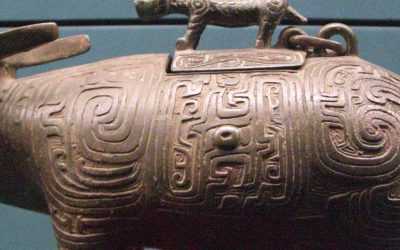
The bull and the political development of Neolithic China
The bull and the political development of Neolithic China Since the history of the penetration of domestic cattle in China goes parallel to that of the political concentration that gave rise to the first cities and later to the first states, that slow penetration of...
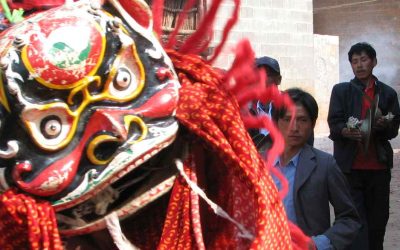
THE LION-DANCE AS RELIGIOUS DANCE
THE LION-DANCE AS RELIGIOUS DANCE The lion-dancers first appeared in China under the Tang dynasty (a.d. 618-906), and made their debut at the court of the kings of Tibet about the same time. The lion-dancer represents a form of the Indian mime or burlesque juggler,...
Taosi. The first capital of China
Taosi. The first capital of China Taosi is one of the most important archaeological discoveries in China in the past decades. Located in the southern part of Shanxi province, is possibly the first urban center emerged in China. The excavation of the ancient city of...
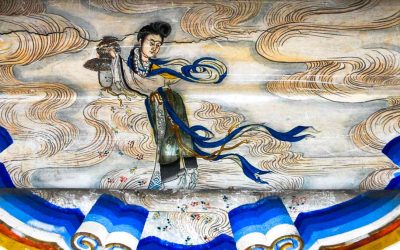
Who is this Goddess of Heaven scattering flowers?
Who is this Goddess of Heaven scattering flowers? When we arrive in a country with a culture as different as China, it is as if a fog blanket covers our eyes, allowing us only a blurred vision of everything around us. Then we recognize the characters in their writing...
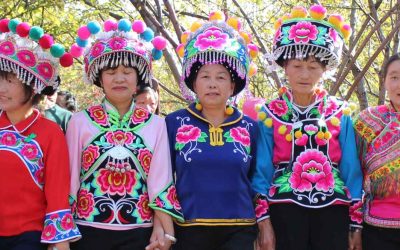
Why do you must visit a Chinese park?
Why do you must visit a Chinese park? Many experienced travelers to China include in their programs the visit a neighborhood market thinking that the essence of the culture of the people is concentrated there. And they have their point, but not only in the market you...
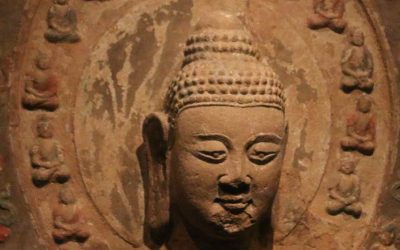
The most beautiful Buddhist sculpture in Beijing
The most beautiful Buddhist sculpture in Beijing It is the "Stone sculpture of the Sakyamuni Buddha with two guardians", which is in the Capital Museum of Beijing. It is dated in the Northern Wei Dynasty, in the 23rd year of the Emperor Taihe (499 AD) This statue is...