


THE LION-DANCE AS RELIGIOUS DANCE
The lion-dancers first appeared in China under the Tang dynasty (a.d. 618-906), and made their debut at the court of the kings of Tibet about the same time. The lion-dancer represents a form of the Indian mime or burlesque juggler, who originally exhibited tame lions and trained monkeys, wandering from place to place, entertaining crowds at fairs and religious festivals.
Along the high roads of Shaanxi Province in northern China are still to be seen numerous square pillars surmounted by figures of lions, monkeys, and stage-fools. In some cases the monkey squats on the lion’s back, in others it is the fool stretching out his hands into the animal’s jaws, who sits astride the lion’s back. He wears the characteristic, spacious, conical fool’s cap, the tip of which falls down in front, his countenance expressing a somewhat melancholy, but humorous good nature.
The mimes, at first, simply covered their faces with a lion mask, and it is an interesting coincidence that the European harlequin also frequently appears with the mask of the lion; for the lion had developed into the emblem of the buffoon.
Live lions were not obtainable in China and Tibet, and as their transportation from India was a costly matter, the strolling mimes soon hit upon the expedient of representing the lion’s body by a covering of cloth and using two men instead of one,—one carrying the head; the other, the hind portion; the trousers of each forming the animal’s feet.
Buddhists recognize the lion as the emblem of Buddha, who in the sacred texts is referred to as “he with the lion’s voice.» The lion is regarded as the protector of his religion; hence huge statues of lions are generally to be found in front of Buddhistic temples. In this way the lion-dance came to be looked upon also as a demon-expelling ceremony.
In Peking companies of acrobats have been organized to cultivate this specialty. The blue and yellow lions perform a contra-dance, displaying an astounding skill and agility; the eyeballs, tongue, jaws, ears, and tail in rapid motion, while the bells of the neck-collars tinkle to the accompaniment of gongs.
The lion being credited with a fondness of playing with a ball, the main feature of the performance is the pursuit by the lions of an enormous ball which is thrown in front of them or across their path. They will even leap on to the roof of a one-storied house, and jump down from there into the courtyard.
En: Berthold Laufer. Oriental Theatricals. Field Museum of Natural History. CHICAGO, 1923
About me: I have spent 30 years in China, much of the time traveling and studying this country’s culture. My most popular research focuses on Chinese characters (Chinese Characters: An Easy Learning Method Based on Their Etymology and Evolution), Matriarchy in China (there is a book with this title), and minority cultures (The Naxi of Southwest China). In my travels, I have specialized in Yunnan, Tibet, the Silk Road, and other lesser-known places. Feel free to write to me if you’re planning a trip to China. The travel agency I collaborate with offers excellent service at an unbeatable price. You’ll find my email below.


Last posts

The goddess of the Sun of the Jingpo
The goddess of the Sun of the Jingpo The goddess of the Sun was in the sky when one day she realized that on Earth the situation of men had changed a great deal. When they were created, they were all equal, and without evil and they did not covet riches. The latest...

Kashgar, the jewel of the Silk Road
Kashgar, the jewel of the Silk Road Those who prepare a trip to the Chinese Silk Road suddenly discover that among the recommended places, there is one at a considerable distance from all the others. It is the city of Kashgar and anyone who takes a trip following the...
The most beautiful Buddhist sculpture in Beijing
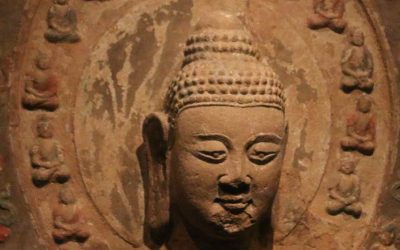
The most beautiful Buddhist sculpture in Beijing It is the "Stone sculpture of the Sakyamuni Buddha with two guardians", which is in the Capital Museum of Beijing. It is dated in the Northern Wei Dynasty, in the 23rd year of the Emperor Taihe (499 AD) This statue is...