


The Horse God as One of the Most Popular Deities in China
If a visitor goes to the Great Wall at Juyongguan, the section closest to Beijing and one of the most historically significant, and takes the time to explore the complex of structures carefully—a recommendation, since Juyongguan was far more than a simple pass—they may notice the presence of a temple dedicated to the God of the Horses. Today, it is one of the few such temples still accessible to travelers, but during the imperial period, temples to the Horse God were among the most widespread in China.
The God of the Horses, known as Mawang (马王) or Mashen (马神), was one of the most widely venerated deities in northern China during the late imperial period. Although he is largely forgotten today, his cult enjoyed broad social reach and was clearly embedded in the economic and administrative structures of the empire.
The importance of Mawang was directly linked to the central role played by horses, mules, and donkeys in everyday Chinese life. These animals were indispensable for agriculture, transportation, artisanal and industrial production, as well as for the military and the imperial courier system. As a result, the God of the Horses was venerated by numerous professional groups, including peasants, merchants, muleteers, donkey drivers, coachmen, veterinarians, and cavalry soldiers.
The cult was not confined to the popular sphere. Because equines constituted a strategic resource for the state, the God of the Horses was also worshipped in official shrines located in government offices, military bases, and palace complexes. During the Ming dynasty, the founder of the regime worshipped this deity, and after the transfer of the capital to Beijing an altar dedicated to the God of the Horses was erected in the new capital. In lower-level administrative units—provinces, prefectures, and cities—the existence of temples devoted to equine deities is likewise documented; these were sometimes referred to as the “gods of the Ming kings” (明王神).
The principal rituals were held in spring and autumn and lasted two days. During these ceremonies, sacrifices were performed on behalf of the great imperial horse herds. The rites included ten white horses adorned with colored silk-paper strips, wine libations, and ritual processions before the Tangse pavilion. A shamanic officiant invoked the spirits through ritual chants, ceremonial music, and the use of a spiritual sword. These practices underscore the close symbolic relationship between equine worship and military power: horses were conceived as a vital resource of the empire.
Alongside Mawang, other deities associated with equines also existed. The God of the Horse Shi (马社神) has been interpreted either as the first human to ride a horse or as the spirit residing in the stables, responsible for keeping the animals calm. In some regions, the God of the Horse’s Steps (马步神) was also worshipped and invoked to prevent disease. Significantly, in certain temples the God of the Horses shared worship with human deities such as the Medicine King (药王), suggesting a theological conception in which draft animals and human beings were regarded as equally vulnerable and equally in need of supernatural protection.
During the Qing dynasty, horse worship acquired particular importance, especially among the Manchus. On the twenty-third day of the sixth lunar month, considered the birthday of the God of the Horses, official ceremonies were held. Officials involved in the management of equines, as well as drivers and peasants, attended these rites to pray for the health and recovery of the animals.
In iconographic representations, Mawang is usually depicted with three eyes, a red face, a disheveled beard, armed with a sword and clad in armor. In many images he appears accompanied by horses and oxen, the animals under his protection. The deity was known by multiple names, including God of the Horses, King of the Horses, Ancestor of the Horses, Ming King of the Horses, and Old Horse King.
The cult of the God of the Horses was, in sum, a religious expression directly derived from an economy profoundly dependent on animal energy. Its decline parallels the disappearance of the horse as a fundamental infrastructure of the state and of productive life. As long as that dependence existed, Mawang occupied a central position in the Chinese religious landscape.
About me: I have spent 30 years in China, much of the time traveling and studying this country’s culture. My most popular research focuses on Chinese characters (Chinese Characters: An Easy Learning Method Based on Their Etymology and Evolution), Matriarchy in China (there is a book with this title), and minority cultures (The Naxi of Southwest China).


Last posts
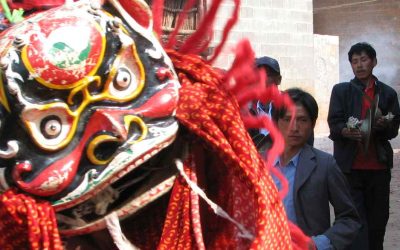
THE LION-DANCE AS RELIGIOUS DANCE
THE LION-DANCE AS RELIGIOUS DANCE The lion-dancers first appeared in China under the Tang dynasty (a.d. 618-906), and made their debut at the court of the kings of Tibet about the same time. The lion-dancer represents a form of the Indian mime or burlesque juggler,...
Taosi. The first capital of China
Taosi. The first capital of China Taosi is one of the most important archaeological discoveries in China in the past decades. Located in the southern part of Shanxi province, is possibly the first urban center emerged in China. The excavation of the ancient city of...
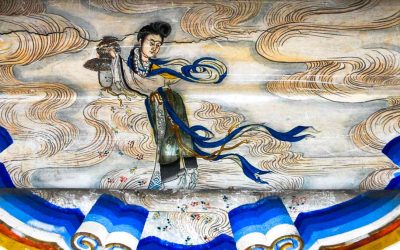
Who is this Goddess of Heaven scattering flowers?
Who is this Goddess of Heaven scattering flowers? When we arrive in a country with a culture as different as China, it is as if a fog blanket covers our eyes, allowing us only a blurred vision of everything around us. Then we recognize the characters in their writing...
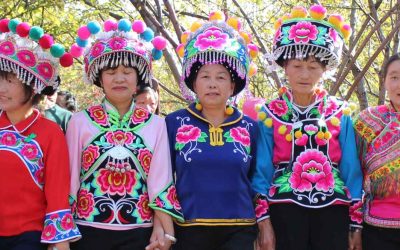
Why do you must visit a Chinese park?
Why do you must visit a Chinese park? Many experienced travelers to China include in their programs the visit a neighborhood market thinking that the essence of the culture of the people is concentrated there. And they have their point, but not only in the market you...
The most beautiful Buddhist sculpture in Beijing
The most beautiful Buddhist sculpture in Beijing It is the "Stone sculpture of the Sakyamuni Buddha with two guardians", which is in the Capital Museum of Beijing. It is dated in the Northern Wei Dynasty, in the 23rd year of the Emperor Taihe (499 AD) This statue is...
Violence and cannibalism in the Five Dynasties
l l Violence and cannibalism in the Five Dynasties When one begins to know the history of China, one concentrates its readings on its brilliant moments, on those great dynasties that expanded the territory, recreated surprising cultural forms and became the greatest...