


Praise for the book on Chinese characters
Good News!
I’m happy to share that my book Chinese Characters: An Easy Learning Based on Their Etymology and Evolution has been selected by BookAuthority.org as one of The Best Etymology Books for Beginners! BookAuthority promotes some titles with the motto: “Start your journey with the best etymology books for beginners, recommended by leaders, experts, and readers worldwide.”
What makes this especially meaningful for me is that the book was originally published on Amazon’s self-publishing platform as a provisional edition, while I searched (in theory) for the time and energy to reach out to publishers and literary agents.
That was over two years ago.
That shows that I’m much more enthusiastic about researching and writing than pitching to publishers, I haven’t even started compiling a list of potential publishers or agents who might be interested in this project.
So, as I add this task (once again) to my 2025 to-do list, I’d like to celebrate this small milestone by sharing a page from the book along with this post.
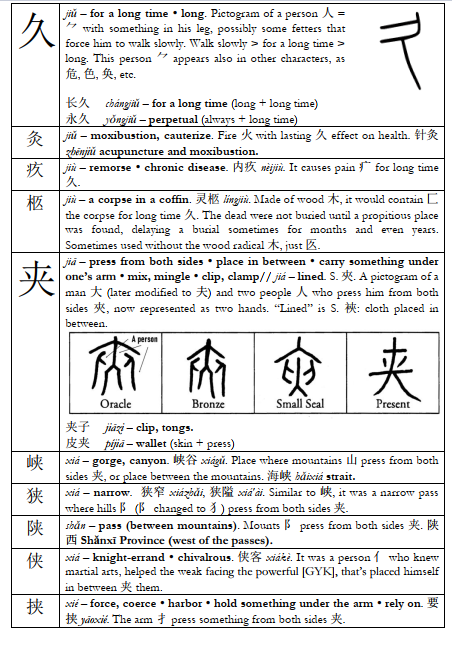
About me: I have spent 30 years in China, much of the time traveling and studying this country’s culture. My most popular research focuses on Chinese characters (Chinese Characters: An Easy Learning Method Based on Their Etymology and Evolution), Matriarchy in China (there is a book with this title), and minority cultures (The Naxi of Southwest China). Yo can see my mis videos in Youtube, and more pictures about China in Instagram (pedroyunnan).
In travel, I have specialized in Yunnan, Tibet, the Silk Road, and other lesser-known places. Feel free to write to me if you’re planning a trip to China. The agency I collaborate with offers excellent service at an unbeatable price. You’ll find my email below.


Last posts
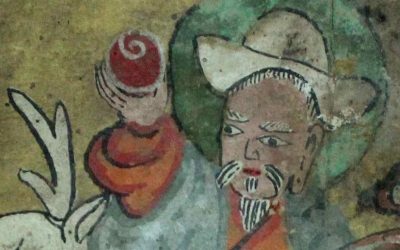
The world of Naxi nationality Dongba deities
The Naxi people believe that every object, animal, plant, or natural phenomena has its own spirit. In the Dongba scriptures more than 2,400 spirits can be found. The sky, earth, sun, moon, mountains, water, wind, and even stones are all believed to be animate and...

The Bulang, aborigines of Yunnan
The Bulang are one of the oldest populations in the Southwest of Yunnan Province. They are considered one of the aboriginal inhabitants of this province, where they could have lived for more than two thousand years. They inhabit this mountainous region that forms the...
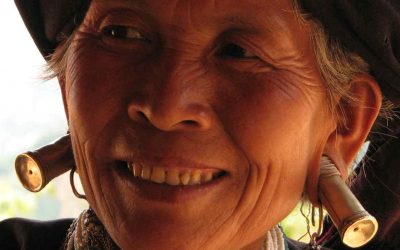
The legend of the salt grandma-Wa nationality
Un mito de la minoría Wa de Yunnan, en China Hace mucho tiempo pasaron por esta zona dos hermanas de la minoría Dai de extraordinaria belleza. Ambas tenían un rostro muy atractivo y maneras agradables por lo que por donde pasaban había hombres que las pedían en...
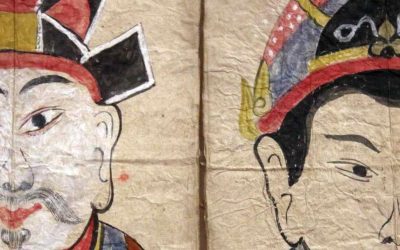
The Baima Tibetan, last heirs of the mythical Di
The Baima are a nationality who live in the border districts of Sichuan (Pingwu and Nanping) and Gansu (Wenxian) Provinces. They are about 10.000 inhabitants that live dispersed for those regions, mixed with the Han. They are concentrated in the Baima village of...
Los Baiyi de Quzuochong, una comunidad olvidada en el centro de Yunnan
En cualquier país que no fuera China, el descubrimiento en los últimos años del siglo veinte, de un pueblo indígena, formado por apenas 500 personas, diferente de cuantos pueblos le rodean, y que practica una religión única, con una serie de ritos y cultos totalmente...

Chinese character 坎 kǎn – pit, hole
Chinese character 吹 chuī – cook 1. pit.2. hole. 3. bank (of a river). 4. ridge HSK - STROKES - RADICAL - 土 Elements ---- An open mouth (lacking) 欠 + earth 土 . Phonetic series 欠. A pictogram of a hole in the earth: the place lacking 欠 earth 土. 垄坎lǒngkǎn ridge...