


Life of Milarepa, the hermit poet.
MiIarepa is one of the most beloved religious leaders of Tibet. His story, full of unique facts, has been told again and again over the centuries, and if the publishers did not warn that this is the autobiography written by the holy monk and religious reformer, the reader would think he was reading a novel, for certainly, the events of Milarepa’s life are more like a literary fable than the biography of a saint.
The first years of his life are a pure tragedy, for after losing his father when he was still a child, he saw how the uncle who should take care of them seizes all the property leaving him with his mother and sister in precarious conditions. An attempt to regain what is theirs ends up condemning them to an even more miserable life. Unable to bear such an outrage, the mother uses her last savings to send Milarepa to study magic. He does so with so much success that soon after he is able to exact the desired revenge, causing disgrace to his uncle’s family, and ruin to many of the neighbors who let him take possession of his family’s wealth.
But Milarepa is not satisfied, he has acted wrongly and only wishes to find a teacher to show him the way to Buddhahood. So he hears about Marpa, a disciple of the sage Naropa and founder of the Kagyupa school in Tibet. Marpa also knows from his omens that Milarepa will become his successor and the true prophet of the school, but even so, he does not show his enthusiasm but subjects Milarepa to one test after another, always putting the teachings of his secret formulas a little further away.
The trials that Milarepa must overcome test his pride and capacity for work and sacrifice. When he is on the verge of collapse, he always counts on the help of Marpa’s wife. After overcoming one trial after another, and spending long years in Marpa’s company, he finally receives his teachings, which are only the prologue to the life as a hermit that he will experience for the rest of his life. Meditating for years, he takes Marpa’s teachings to heart.
The separation comes when he dreams of his mother and decides to return to his homeland. His house is in ruins, and inside it the remains of his mother, after providing her a funeral he gives his goods to his enemies and takes refuge in solitary meditation.
His life is pure meditation and pure asceticism, surviving sometimes by eating nettles and other times with food given to him by hunters or pilgrims. A new encounter with his sister and a childhood friend only serves to reaffirm him in his life devoid of all material comfort. The women’s attempts to make him wear something more than rags, and eat a little better, are answered by Milarepa’s mockery.
The narrative is told in the first person, as he recounts his experiences at the request of his disciples, so the reader assumes that he has already become a revered religious leader. His life as a hermit is still as austere and his contempt for the conventions of the world leads him to death, an end from which he does not want to free himself because he considers that the end of his life has already come.
The last pages end with some admonitions that for Christians awaken strange parallelisms with those of Jesus Christ, for after exhorting his disciples to prayer:
«Pray wherever you are. Wherever you pray in faith, I will be among you. You shall obtain whatever you ask.»
His greatest desire is to bear the sins of mankind:
«May the sins of all beings be blotted out
by the virtue of my merits
and by that of the Buddhas of the three epochs.
May all your sorrows
Fall on my back and be erased by me.
I feel pity for him who offends
His master, his mother, and his brother.
May the punishment of his conduct
fall on my back and be wiped out by me.»
After his death, a series of celestial prodigies follow, signaling that a saint has indeed died.
The Kagyupa school is the third most important in Tibet. Its foundations were taught by Naropa to Marpa, who translated them and took them to Tibet. Milarepa was Marpa’s main disciple. Milarepa is famous for his life as a hermit, the extremes of whose dedication are shown in this book, and his poetry, his chants having been translated into all the major languages.
The most important characteristic of the Kagyupa doctrine is that they believe that enlightenment can be attained in a single life rather than through a long process of reincarnations. They follow the example of the historical Buddha advocated by the great yogi Tilopa, who lived in India in the 11th century. To achieve this goal, the adepts must be instructed by a master and practice meditation under his guidance. Because both activities lead to the discovery of the true nature of the mind, and from there to liberation.


Last posts
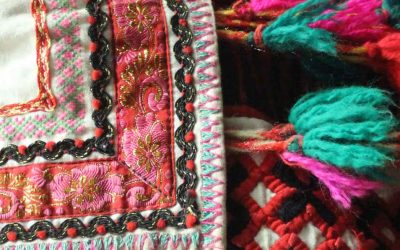
The goddess of the Sun of the Jingpo
The goddess of the Sun of the Jingpo The goddess of the Sun was in the sky when one day she realized that on Earth the situation of men had changed a great deal. When they were created, they were all equal, and without evil and they did not covet riches. The latest...
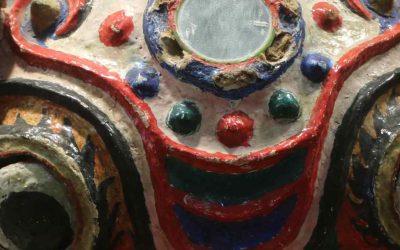
Funeral Masks of the Zhuang people in the Nationalities Museum of Kunming
Funeral Masks of the Zhuang people in nationalities Museum of Kunming Known as Longyawai Masks, they are funeral ceremony masks popular in the Zhuang communities of Wenshan Autonomous Prefecture, on the east of Yunnan Province. The masks are shaped as a lion, they are...
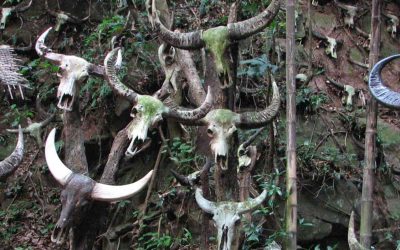
The creation of the world among the Wa of China
The creation of the world among the Wa of China As soon as the heaven was formed, it looked like the back of a toad, full of lumps and protrusions, it was very ugly. The god Li[i] extended his hands and was polishing without stopping. Nobody knows how many years he...
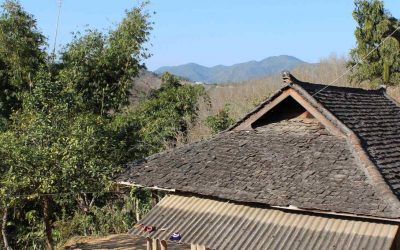
The Jinuo, descendants of the uncle
The Jinuo, descendants of the uncle The Jino, with a population of only 21.500 persons (in 2005) are one of the smallest minorities in China and the last to be officially recognized as such, as they were designated a national minority and granted the special rights...
The Blue Women of China of the Yao minority
The Blue Women of China of the Yao minority Many people have heard of the Blue Men of the Sahara (the Tuareg), but few have heard of the Blue Women of China. And in fact among the women of the so-called Landian Yao or Landen Yao outside China, the production, dyeing...
The Landing Yao Ancestral Festival of July
The Landing Yao Ancestral Festival of July All around China, the seventh month of the lunar calendar is known as the month of the ghosts, because in this month is celebrated the Mid-Year Festival. The Mid-Year Festival has nowadays many variations and it includes a...