


Did a Taoist Art of the bedchamber of male Homosexuality Exist?
This is the question posed by Zhang Wanrong in an intriguing article published last year in the journal Religions[1].
The Taoist Art of the bedchamber
For those unfamiliar with the topic, among the techniques for achieving immortality—practices intended to preserve health and attain longevity—was the so-called Taoist sexuality or Art of the bedchamber. It was based on altering the balance of yang and yin energies in favor of the man. Essentially, Taoists proposed that men could enhance their yang life energy by engaging in intercourse with multiple women, especially young or virgin women, who were believed to possess strong yin or feminine energy. By controlling their ejaculation and not losing their yang essence, they would continuously accumulate yang, ultimately achieving long life and potential immortality.
Some of the classic texts that formed the basis of these theories even recommended group sex and encouraged practitioners to have relations with numerous very young women.
Homosexual Love in 17th-Century China
On the other hand, it is well known that during the late Ming dynasty and the early Qing dynasty—essentially from the 17th to the 19th century—there was a tremendous wave of male homosexual love in China. While there are already records of homoerotic relationships between various emperors and their favorites or eunuchs—indeed, the Book of Han (Hanshu) mentions favorites who would sleep and wake with the emperor—during this period, homosexuality became fashionable among scholars and the upper classes. Many intellectuals sought young boys to satisfy their pleasures, though relationships between equals also existed.
Erotic Novels with Homosexual Themes
According to Mr. Zhang, some writers of erotic novels with homosexual themes may have attempted to provide a sort of health-based justification for these practices by incorporating them into the Taoist Art of the bedchamber. They claimed that young boys under the age of twenty had not yet developed yang energy and could therefore be grouped with young girls, in whom yin energy predominated. Consequently, sexual relations with them were purportedly just as beneficial for health as relations with women. However, no medical texts support this claim.
As fundamental references, some novels from that period include Yichun Xiangzhi (The Fragrance of Quality of the Good Spring) and Feng Shuangfei (Two Phoenixes Flying Together), as well as descriptions of the life of a famous Taoist, Ma Zhenyi (馬真一), who, interestingly, employed both elderly women and very young boys in his immortality techniques.
A Cultural Justification
As we can see, there is no strong historical foundation for the existence of a homosexual Art of the bedchamber among Taoists. However, as the author points out, this notion at least provided a culturally and health-based justification (as some narratives traced its origins to alleged homosexual relations between Laozi and Xin Yi, the guardian of the Western Pass for whom he wrote the Daodejing) for those who practiced it.
Regarding the passive partner in these relationships, one novel (Bian’er Chai—Cap and Hairpin) even offers a health-related justification, depicting a protagonist who nourishes his yang when having relations with women and his yin when with men.
It is certainly an intriguing and thought-provoking proposition. Future research may confirm or refute it, but in the obscure realm of the history of sexuality in classical China, it remains, at the very least, a bold hypothesis.
[1] Zhang Wanrong. The Daoist Art of the Bedchamber of Male Homosexuality in Ming and Qing Literature. Religions, 15: 841. 2024.
About me: I have spent 30 years in China, much of the time traveling and studying this country’s culture. My most popular research focuses on Chinese characters (Chinese Characters: An Easy Learning Method Based on Their Etymology and Evolution), Matriarchy in China (there is a book with this title), and minority cultures (The Naxi of Southwest China). In my travels, I have specialized in Yunnan, Tibet, the Silk Road, and other lesser-known places. Feel free to write to me if you’re planning a trip to China. The agency I collaborate with offers excellent service at an unbeatable price. You’ll find my email below.


Last posts

The Silk Road: Ancient communication between Asia and Europe
The Silk Road: Ancient communication between Asia and Europe The Silk Road is the longest and oldest commercial network on our planet, the oldest, the one used for the longest time, and the one that has had the greatest importance for the formation of the world as we...
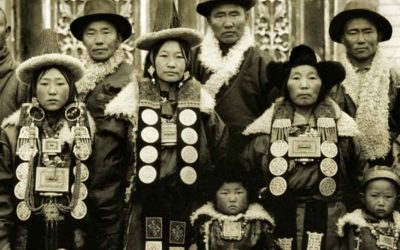
The Yugur of Gansu, descendants of the Kings of Dunhuang
o The Yugur of Gansu, descendants of the Kings of Dunhuang Name. Their Chinese name is Yugu, written 裕 固 族. The Yugu or Yugur call themselves Yaoyuer and Xilayuguer. The name Yugur is relatively recent, as it only began to be used after 1949. Population: About 13,000...
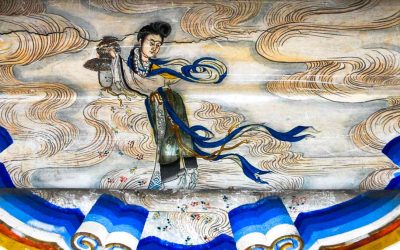
Who is this Goddess of Heaven scattering flowers?
Who is this Goddess of Heaven scattering flowers? When we arrive in a country with a culture as different as China, it is as if a fog blanket covers our eyes, allowing us only a blurred vision of everything around us. Then we recognize the characters in their writing...
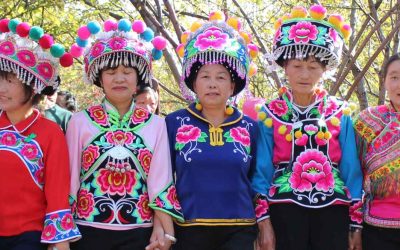
Why do you must visit a Chinese park?
Why do you must visit a Chinese park? Many experienced travelers to China include in their programs the visit a neighborhood market thinking that the essence of the culture of the people is concentrated there. And they have their point, but not only in the market you...

Description of Mount Taishan in 1870
Description of Mount Taishan in 1870 You know I love to read testimonials from the past about travel and culture in China. Some of the authors who were writing at that time didn't have much opportunity to know more or their goal was simply to share their experience or...
Two stories of Liu Ba, the Bai trickster
Two stories of Liu Ba, the Bai trickster The Bai are one of the minorities who have had the longest contact with the Chinese.They are also one of the minorities that has received more cultural influences. This has been due to the accessibility of the land they...