


Chinese Herbal Medicine Shop in Weishan, Yunnan
China still maintains a strong tradition of using natural medicines, specifically herbs with medicinal properties that have been used for centuries. In addition to being present in the composition of many modern medications, some herbalists continue their traditional trade. Even in large cities, it is not uncommon to occasionally find herbalists selling fifteen or twenty products in their small stall or shop, each stored in a plastic bag. Usually, these products do not have labels, meaning that only an expert knows exactly what each medicine is.
Herbal medicine shop
In this shop, located in the ancient city of Weishan in Yunnan province, we find what could be described as the pinnacle of Chinese herbal medicine. Within this traditional house on the main street of the old town, we discover a unique display of medicinal herbs. On the left, some medicines are neatly arranged in white plastic bags, this time identified with small labels. Higher up, in a small nod to modern civilization, others are carefully placed in plastic bottles.
A unique shop in China
However, what makes this shop stand out from all the other similar stores and stalls across China is the sheer volume of herbs stored in the white and green sacks seen on the right side of the image. It is well known that each medicinal herb must be harvested at a specific time of the year and that many of these herbs are needed in large quantities to be therapeutically effective. The foresight of this traditional pharmacist creates a truly unique scene in the ancient city of Weishan.
Wonderful Weishan Old City
Weishan is one of the oldest cities in Yunnan province. Officially designated as an autonomous district for the Yi and Muslim communities within the Bai Autonomous Prefecture of Dali, Weishan boasts significant historical, artistic, and cultural attractions. Among them, the Ancient City, with thousands of well-preserved buildings, and Weibaoshan Mountain, located 10 km from the city, stand out as the most important Taoist mountain in Yunnan.
This is why we include this city in almost all of our itineraries in Yunnan.


Last posts
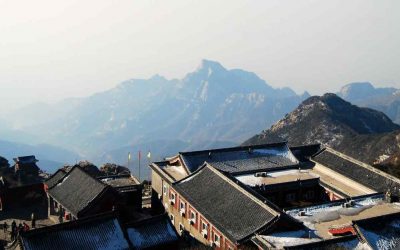
The sacred Taishan mountain
Taishan Mountain, life and death in Chinese culture, according to the work of Edouard Chavannes Mountains are, in China, divinities. They are considered as nature powers who act in a conscious way and who can, therefore, be made favourable by sacrifices and touched...

Family of characters 欠 qian
欠 qiàn – yawn; owe/ short of, lacking. The upper part evolved from the pictogram of an open mouth. A person人with an open mouth is yawning, or trying to compensate for the lack of air. 欠缺 qiànquē – lack/ be deficient of (lack + lack) 欠债 qiànzhài – owe a debt...
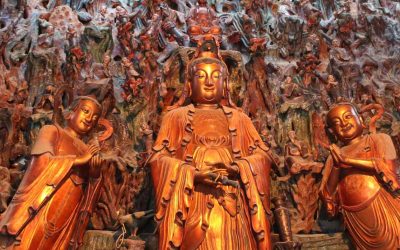
The Temple of the Soul Retreat in Hangzhou In 1930s
On the left side was a densely wooded rocky hill. Its steep slope was carved into fantastic figures of unicorns, leogryphs and other mythological animals, and statues of gods and saints. They had been fashioned out of rock by the monks more than fifteen centuries ago....
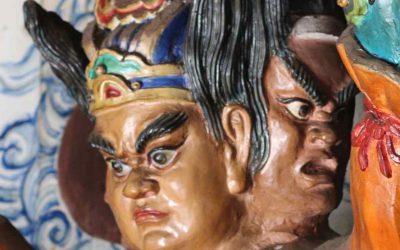
A Taoist exorcism séance
'My friend is going to conclude an exorcism service this morning and, if you are really so interested, he hopes you can come and witness it.' He paused uncertainly. 'But I must warn 86 you that it is not a pretty sight. Really it is most unpleasant, disgusting and...
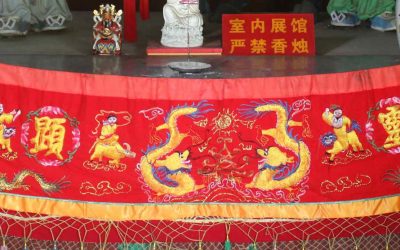
Chinese superstitions before the birth
To have five sons, rich, vigorous, literate and who become mandarins: this is the ideal of any Chinese family. From this matrix idea emerged the various types of popular images that are displayed in all households: Wu Zi Deng Ke (五子登科), Have five official children!...
Asking about Taoism
Now is the time to ask him something about Taoism, I decided, and I poured out my questions. He looked up at me with his innocent, childish eyes, his smile gentle but, I thought, slightly ironical. 'Take time, observe and learn,' he said simply. 'Words spoken in haste...