


Chinese Herbal Medicine Shop in Weishan, Yunnan
China still maintains a strong tradition of using natural medicines, specifically herbs with medicinal properties that have been used for centuries. In addition to being present in the composition of many modern medications, some herbalists continue their traditional trade. Even in large cities, it is not uncommon to occasionally find herbalists selling fifteen or twenty products in their small stall or shop, each stored in a plastic bag. Usually, these products do not have labels, meaning that only an expert knows exactly what each medicine is.
Herbal medicine shop
In this shop, located in the ancient city of Weishan in Yunnan province, we find what could be described as the pinnacle of Chinese herbal medicine. Within this traditional house on the main street of the old town, we discover a unique display of medicinal herbs. On the left, some medicines are neatly arranged in white plastic bags, this time identified with small labels. Higher up, in a small nod to modern civilization, others are carefully placed in plastic bottles.
A unique shop in China
However, what makes this shop stand out from all the other similar stores and stalls across China is the sheer volume of herbs stored in the white and green sacks seen on the right side of the image. It is well known that each medicinal herb must be harvested at a specific time of the year and that many of these herbs are needed in large quantities to be therapeutically effective. The foresight of this traditional pharmacist creates a truly unique scene in the ancient city of Weishan.
Wonderful Weishan Old City
Weishan is one of the oldest cities in Yunnan province. Officially designated as an autonomous district for the Yi and Muslim communities within the Bai Autonomous Prefecture of Dali, Weishan boasts significant historical, artistic, and cultural attractions. Among them, the Ancient City, with thousands of well-preserved buildings, and Weibaoshan Mountain, located 10 km from the city, stand out as the most important Taoist mountain in Yunnan.
This is why we include this city in almost all of our itineraries in Yunnan.


Last posts
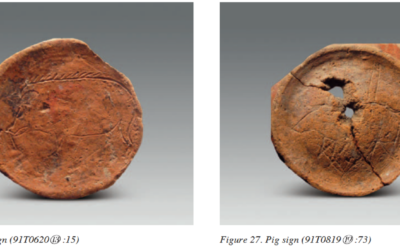
The Shuangdun Signs and the Origins of Chinese Writing
The Shuangdun Signs and the Origins of Chinese Writing When the origins of Chinese writing are discussed, attention almost always turns to the oracle bones of the Shang dynasty. Yet thousands of years before characters were carved onto turtle plastrons, surprisingly...
Zhangjiajie: The Sublime Landscape of the Film Avatar
Zhangjiajie: The Sublime Landscape of the Film Avatar Zhangjiajie is now one of my favorite destinations in China. Not only does it boast some of the country’s most spectacular landscapes, but in recent years it has continued to work on turning these places into...
Geckos and the “Mark of Chastity” in Imperial China: History, Symbolism, and Cultural Context
Geckos and the “Mark of Chastity” in Imperial China: History, Symbolism, and Cultural Context Across the long span of imperial Chinese history, the gecko occupied a surprisingly prominent place in discussions of female chastity, bodily integrity, and the regulation of...
Why It Is Necessary to Study Suicide in Chinese Culture
Why It Is Necessary to Study Suicide in Chinese Culture While drafting new chapters for my Brief History of China, cases of suicide kept appearing in the most diverse circumstances. Ministers and wives who allowed themselves to be buried alive to accompany kings to...
The true origin of the Great Wall
The true origin of the Great wall, as seen in Nicola Di Cosmo (The Origins of the Great Wall. Silk Road Journal. 1993). Generally speaking, the political discourse about foreigners in pre-imperial China tends to justify expansion and conquest, which is exactly what...
Tiger Leaping Gorge: a 3,000-meter drop into the Yangtze River
Tiger Leaping Gorge: a 3,000-meter drop into the Yangtze River The Yangtze River is the longest river in China and, at 6,300 km, the third longest in the world. It is China’s vital artery, flowing from its source on the Tibetan Plateau across the country’s central...