


The economics of human plowing
According to “The Exploitation Of The Works Of Nature”, a 17th century Chinese book.
In farming households where there are no oxen to use, farmers fix a pole to the plough and two men pull the plough by placing the pole on their shoulders, walking one behind the other. One day’s work by two men is equal to that by one ox. If the farmers have no oxen to drive a harrow, they construct a rotary harrow that is pulled by two men. They use their shoulders and hands to operate the harrow to break the clods. One day’s work by two men is equal to that of three oxen. There are only two kinds of cattle in the Central Plains of China, the water buffalo and the yellow ox, and the former is twice as strong as the latter. However, it requires twice as much care to raise water buffalos compared with raising the yellow oxen because the water buffalos must be housed in earthen sheds during the cold winter and provided with a pond for bathing in summer. Prior to the Spring Equinox cattle perspire a lot while ploughing, so they must be driven to the sheds immediately before it rains to keep them from exposure to the rain. But they are immune to wind and rain after the Grain Rain.
The farmers in the areas centred around Suzhou use hoes instead of ploughs, and do not use working cattle. Considering the cost of cattle and the feed, and the risks of sickness, theft and death, poor farmers would rather use human labour in ploughing. If a farming household with cattle can work ten mu of land, then an industrious farmer, by using a hoe, can work five mu of land. Since these farming families do not have working cattle, they do not need to worry about such matters as growing forage grass and grazing, and can plant beans, wheat, sesamum and vegetables after the harvest. The harvest of the above grains and vegetables will compensate the farmers for the loss resulting from the five mu of land that is not planted by using working cattle. It seems to be a good arrangement.
Song Yingxin. Tiangong kaiwu. Guandong Education Publishing House. 2011. p. 15.
Tiangong kaiwu 天工開物 «The exploitation of Heavenly treasures» is a compendium on industry, agriculture and artisanry written during the late Ming period 明 (1368-1644) by Song Yingxin. The Tiangong kaiwu is one of the most important early books on Chinese science and technology. With its wide range of topics described, it can serve as an encyclopaedia on early modern crafts and industries in China. The Tiangong kaiwu is mainly based on actual experience and less on cosmological speculations, as was often the case in earlier writings. Therefore, it provides the reader with numerous practical information. Ulrich Theobald. Tiangong kaiwu 天工開物. Chinaknowledge. 2010.


Last posts
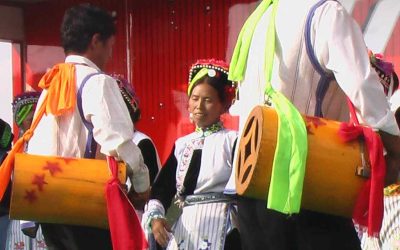
The Flood Myth, Shamans and the Sani Religion
The Flood Myth, Shamans and the Sani Religion We continue with the second chapter of Paul Vial “Los Lolos”, in which fragments dedicated to the myth of the flood and the activities of its shamans are particularly striking. CHAPTER II - RELIGIOUS TRADITIONS These...
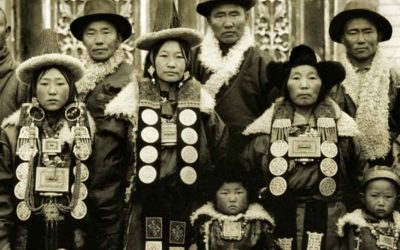
There was a matriarchy among the Yugur?
There was a matriarchy among the Yugur? The matrimonial customs of the Yugur present differences between their two main groups. Among the Eastern Yugur, girls had a time of great sexual freedom. Their rite of passage was the ceremony of making the headdress, which was...

The Silk Road: Ancient communication between Asia and Europe
The Silk Road: Ancient communication between Asia and Europe The Silk Road is the longest and oldest commercial network on our planet, the oldest, the one used for the longest time, and the one that has had the greatest importance for the formation of the world as we...