

Peter Harvey. Buddhism: Teachings, History and Practices. Cambridge University Press. 2013.
(Excerpts from the book. Page 11 and ff.)
In its origin, Buddhism was a Samana-movement. Samanas were wandering ‘renunciant’ thinkers who were somewhat akin to the early Greek philosophers and mystics. The Samanas rejected the Vedic tradition and wandered free of family ties, living by alms, in order to think, debate and investigate. The main Samana groups of Buddha’s time were:
JAINS
Jainism was founded, or at least led in the Buddha’s day, by Vardhamāna the Mahāvīra, or ‘Great Hero’. It teaches that all things, even stones, are alive, each containing a Jīva, or ‘Life-principle’. These are seen as individually distinct, rather like the Western idea of a ‘soul’ but unlike the universal Ātman of the Upanisads, and to be naturally bright, omniscient and blissful. The aim of Jainism is to liberate one’s Jīva from the round of rebirths by freeing it from being weighed down by an encrustation of karma, seen as a kind of subtle matter. The methods of doing so are primarily austerities such as fasting, going unwashed and pulling out the hair, so as to wear out the results of previous karma, and self-restraint, total non-violence to any form of life, and vegetarianism, so as to avoid the generation of new karma. The free-will of the Jīva is emphasized, though even actions such as unintentionally killing an insect are held to generate karma.
AJIVIKAS
Their founder was Makkhali Gosāla (Skt Maskarin Gośāla). Gosāla’s key doctrine was that niyati, or impersonal ‘destiny’, governed all, such that humans had no ability to affect their future lives by their karma: actions were not freely done, but were determined by niyati. Gosāla thus believed in rebirth, but not in the principle of karma as that which regulates the level of a person’s rebirth. The ‘Life-principles’ of living beings are driven by niyati alone through a fixed progression of types of rebirths, from a low form of animal to an advanced human who becomes an Ājīvika ascetic. The Ājīvikas practised rigorous asceticism such as fasting, nakedness and perhaps also disfiguring initiations, and aimed to die by self-starvation (as Vardhamāna in fact did), as a fitting way to end their last rebirth.
MATERIALISTS
The Materialists’ aim was to lead an abstemious, balanced life which enjoyed simple pleasures and the satisfaction of human relationships. They denied any kind of self other than one which could be directly perceived, and held that this was annihilated at death. They therefore denied the idea of rebirth, and also those of karma and niyati. Each act was seen as a spontaneous event without karmic effects, and spiritual progression was not seen as possible.
SKEPTICS
The Skeptics responded to the welter of conflicting theories on religious and philosophical issues, and the consequent arguments, by avoiding commitment to any point of view, so as to preserve peace of mind. They held that knowledge on such matters was impossible, and would not even commit themselves to saying that other people’s views were wrong. The Buddha saw this evasive stance as ‘eelwriggling’, though he shared the wish to step aside from the ‘jungle’ of conflicting views, and avoid dogmatic assertions built on flimsy grounds.

More posts on Chinese culture
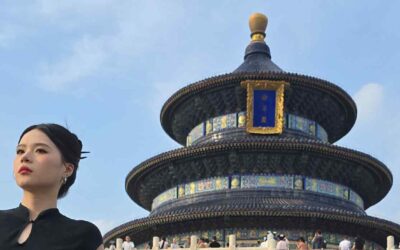
Imperial Processions to the Temple of Heaven
Imperial Processions to the Temple of Heaven Those who know China—even if only through a brief trip—and who have visited the Temple of Heaven in Beijing will surely have been fascinated by the sober beauty of its buildings. Yet, whether on a crowded day or during a...
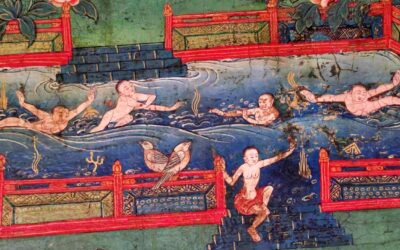
Most Frequent Scenes from the Life of the Buddha in Tibetan Art
Most Frequent Scenes from the Life of the Buddha in Tibetan Art In fact, only a few moments are repeated very frequently in Tibetan paintings. In some versions there are eight—an auspicious number for Tibetans, corresponding to the Noble Eightfold Path and the eight...
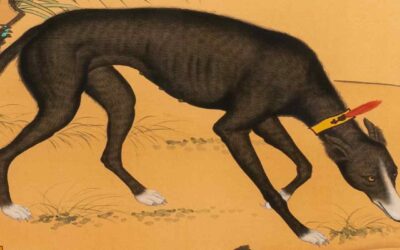
The Dog as Psychopomp in China
The Dog as Psychopomp in China One of the oldest human beliefs was that after death there existed an immaterial part of the person—later called the soul or spirit—that did not disappear with the body. Its origin may lie in the “presence” of the dead in dreams,...
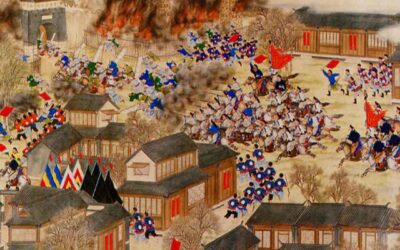
An ambitious project to rewrite history
An ambitious project to rewrite history. It is what we see in Lhamsuren Munkh-Erdene, The Nomadic Leviathan. A Critique of the Sinocentric Paradigm. Brill. Leiden. 2023. Now free to download in the publisher’s webpage. This book is a critique of a theoretical paradigm...
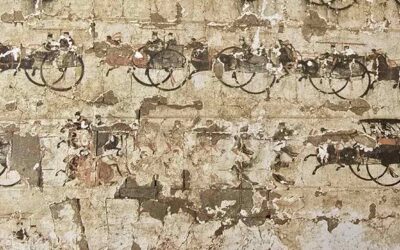
Why I devoted more than a year to researching suicide in Chinese culture
Why I devoted more than a year to researching suicide in Chinese culture In early November 2022 my friend, the psychiatrist Luz González Sánchez, told me that she was preparing a lecture on suicide. On the 8th of that same month, during a quiet moment, I made a brief...

The Tibetan Deity with a Horse Face
The Tibetan Deity with a Horse Face During my most recent journey to Tibet, someone pointed out to me in a temple a deity who bore a small horse upon his head. I knew that this protector is called Hayagriva, and that he is sometimes referred to as “Horse-Headed” or...
More posts on China ethnic groups
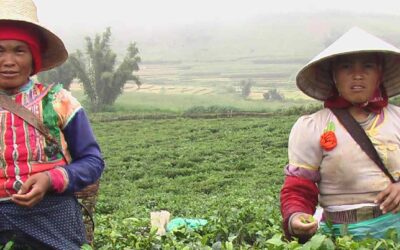
The Bull that Shaped the World and Other Sacred Bovines among the Bulang Minority
The Bull that Shaped the World and Other Sacred Bovines among the Bulang Minority The Bulang people (布朗族), an Austroasiatic ethnic group primarily inhabiting Yunnan’s tea-growing highlands, revere the ox as a sacred being intertwined with creation, agriculture, and...
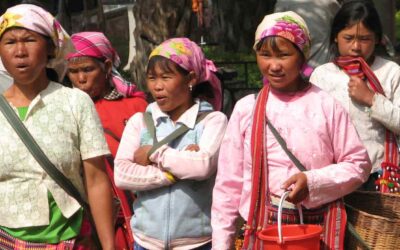
The Lahu Matriarchy: An Egalitarian Dyadic Society in China
The Lahu Matriarchy: An Egalitarian Dyadic Society in China From the book: Mothers, Queens, Goddesses, Shamans: Matriarchy in China (Miraguano, Madrid, 2011) The egalitarian society of the Lahu drew academic attention with Du Shanshan’s study Chopsticks Only Work in...
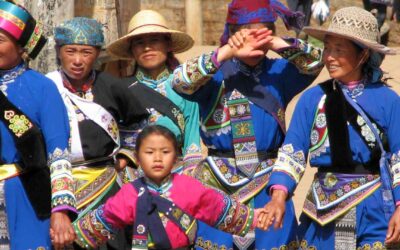
An Old Book on the Sani-Yi Minority
An Old Book on the Sani-Yi Minority One may wonder whether it makes any sense to read, in the first decades of the 21st century, a book written at the end of the 19th. Clearly, the person who has spent some of their time translating it, revising it, updating the old...
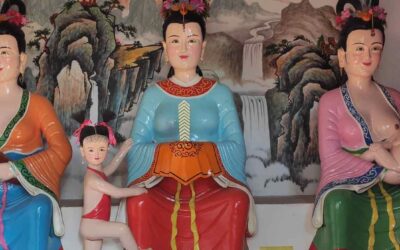
Sexual aspects of Gu venom
Gu illness resulted from a contamination by gu poison, which a recent analyst has characterized as “an alien evil spirit which entered [the] body and developed into worms or some similar animal that gnawed away at the intestines or genitalia.” This poison was thought...
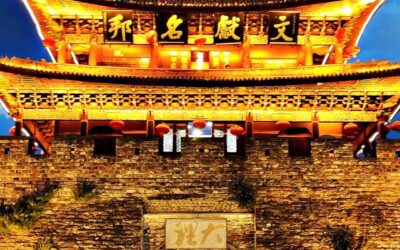
Sunset in Dali
No Words Fuxing Rd from the South Gate. Dali, Yunnan.Corner in Fuxing Rd, Dali, Yunnan.Night market at the south of the South Gate. Dali. YunnanLast posts
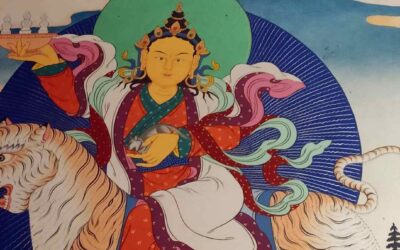
The five secret temples of the lamas in Lijiang
The five secret temples of the lamas in Lijiang Religions of Lijiang Although the city of Lijiang is known primarily for the Dongba religion practiced by the traditional shamans of the Naxi, also called Dongba, who with their rituals administered the religious and...