


Praise for the book on Chinese characters
Good News!
I’m happy to share that my book Chinese Characters: An Easy Learning Based on Their Etymology and Evolution has been selected by BookAuthority.org as one of The Best Etymology Books for Beginners! BookAuthority promotes some titles with the motto: “Start your journey with the best etymology books for beginners, recommended by leaders, experts, and readers worldwide.”
What makes this especially meaningful for me is that the book was originally published on Amazon’s self-publishing platform as a provisional edition, while I searched (in theory) for the time and energy to reach out to publishers and literary agents.
That was over two years ago.
That shows that I’m much more enthusiastic about researching and writing than pitching to publishers, I haven’t even started compiling a list of potential publishers or agents who might be interested in this project.
So, as I add this task (once again) to my 2025 to-do list, I’d like to celebrate this small milestone by sharing a page from the book along with this post.
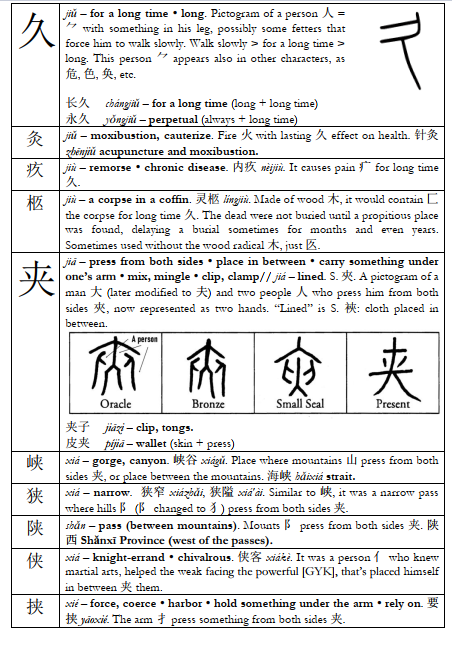
About me: I have spent 30 years in China, much of the time traveling and studying this country’s culture. My most popular research focuses on Chinese characters (Chinese Characters: An Easy Learning Method Based on Their Etymology and Evolution), Matriarchy in China (there is a book with this title), and minority cultures (The Naxi of Southwest China). Yo can see my mis videos in Youtube, and more pictures about China in Instagram (pedroyunnan).
In travel, I have specialized in Yunnan, Tibet, the Silk Road, and other lesser-known places. Feel free to write to me if you’re planning a trip to China. The agency I collaborate with offers excellent service at an unbeatable price. You’ll find my email below.


Last posts

The dog in China’s ancient tombs
Pedro Ceinos Arcones. La Magia del perro en China y el mundo. Dancing Dragons Books. 2019. (Excerpts from the book) The dog in China’s ancient tombs In China, dogs buried with their owners have been discovered in archaeological sites belonging to the most important...
Some philosophical schools in Buddha’s times
Peter Harvey. Buddhism: Teachings, History and Practices. Cambridge University Press. 2013. (Excerpts from the book. Page 11 and ff.) In its origin, Buddhism was a Samana-movement. Samanas were wandering ‘renunciant’ thinkers who were somewhat akin to the early Greek...
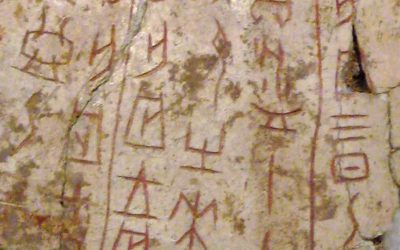
The origin of Chinese characters
The origin of Chinese characters in John C. Didier, “In and Outside the Square,” Sino-Platonic Papers, 192, vol. 1 (September, 2009) The technology of writing appears suddenly and morphologically fully developed on Shang oracle bones and, later, bronzes at about the...

Childbirth in Naxi culture
The rituals performed at birth suggest that in the Naxi traditional thought the entering of the Sv life god in a person is a gradual process developed during the last term of pregnancy and the first days of life, and that this process is considered complete in a first...

The wonderful culture of the Jinuo
Hidden in the tropical mountains of China’s southern border lives one of its most interesting minorities: The Jino nationality. With a population of only 21,000 people they are one of the less known ethnic groups in China, who in the past were often confused with the...

Chinese character 次 second, times
Chinese character 次 second, times second times, order inferior remain stand. HSK - 2 STROKES - 6 RADICAL - 冫Elements ---- two 二 + open mouth 欠. Phonetic series 次. This is two 二 breaths (or two sneezes) with an open mouth 欠, emphasizing the second one. Second >...