


Portrait of a Mandarin in 1800
This was the year in which a very interesting book was published, which through 60 portraits, tried to show some aspects of life in China to the western public. A book now in the public domain, from which we adapted «A Mandarin of distinction, in his ceremonial habit.»
The dress of a Chinese is suited to the gravity of his demeanour. It consists, in general, of a long vest extending to the ankle: the sleeves are wide at the shoulder, are gradually narrower at the wrist, and are rounded off in the form of a horse-shoe, covering the whole hand when it is not lifted up. No man of rank is allowed to appear in public without boots, which have no heels, and are made of satin, silk, or calico. In full dress he wears a long silk gown, generally of a blue colour and heavily embroidered; over this is placed a surcoat of silk, which reaches to the hand, and descends below the knee. From his neck is suspended a string of costly coral beads. His cap is edged with satin, velvet, or fur, and on the crown is a red ball with a peacock’s feather hanging from it: these are badges of distinction conferred by the emperor. The embroidered bird upon the breast is worn only by mandarins high in civil rank, while the military mandarins are distinguished by an embroidered dragon. All colours are not suffered to be worn indiscriminately. The emperor and the princes of the blood only, are allowed to wear yellow; although violet colour is sometimes chosen by mandarins of rank on days of ceremony. The common people seldom wear any other than blue or black, and white is universally adopted for mourning.
— The Chinese carefully avoid every word or gesture which may betray either anger or any violent emotion of the mind. They entertain the highest reverence for their parents, and respect for the aged. They are enthusiastic admirers of virtue, and venerate the memory of such of their nation as have been celebrated for a love of justice and of their country, With this singular people neither riches nor birth can ever establish the smallest claim to honours. Personal merit is the sole basis upon which any man can raise himself to distinguished rank. Talents and virtue are indispensably requisite for those in power ; and where they are deficient, every advantitious or hereditary pretension is totally disallowed.
De George Henry Mason. The costume of China: illustrated by sixty engravings: with explanations in English and French. London, 1800.


Last posts
Why It Is Necessary to Study Suicide in Chinese Culture
Why It Is Necessary to Study Suicide in Chinese Culture While drafting new chapters for my Brief History of China, cases of suicide kept appearing in the most diverse circumstances. Ministers and wives who allowed themselves to be buried alive to accompany kings to...
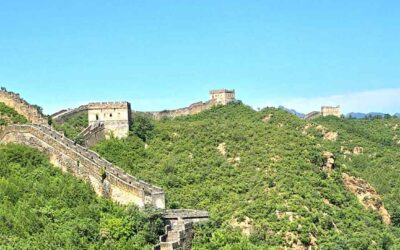
The true origin of the Great Wall
The true origin of the Great wall, as seen in Nicola Di Cosmo (The Origins of the Great Wall. Silk Road Journal. 1993). Generally speaking, the political discourse about foreigners in pre-imperial China tends to justify expansion and conquest, which is exactly what...

Tiger Leaping Gorge: a 3,000-meter drop into the Yangtze River
Tiger Leaping Gorge: a 3,000-meter drop into the Yangtze River The Yangtze River is the longest river in China and, at 6,300 km, the third longest in the world. It is China’s vital artery, flowing from its source on the Tibetan Plateau across the country’s central...