


Legends of the Mother Goddess
I am pleased to share with all you that the Italian translation of my book Legends of the Mother Goddess (and Other Myths of Goddesses and Women from the Peoples of China) has now been published and is available for purchase. As many of you already know, this book was pioneering in the field of mythology and gender studies in the West, as it was the first to bring together in a single volume more than 40 myths and legends from China’s ethnic minorities in which the protagonists were female deities.
Although a book on this subject cannot become tremendously popular, it has reached a market of specialized readers who have shown great interest in matriarchy in China—a topic to which I dedicated another of my books (Matriarchy in China: Mothers, Queens, Goddesses, and Shamans)—as well as in Chinese mythology. For this reason, whenever I have been in contact with translators of other languages, this has been one of the most sought-after works. In fact, there are already translations into Portuguese and Greek.
I believe this Italian edition stands out thanks to the care and dedication of the translator, Angelica Deluigi. We have also added a few additional myths to the original version to make the book more engaging, and it includes an insightful afterword by Maria Omodeo.
The book can be obtained at this link, and above you will also find the Amazon links to the original Legends of the Mother Goddess and Matriarchy in China. However, these books are not only available on Amazon but also in all bookstores in Spain—just request them and you will have them within a couple of days. I hope this news is of interest to you, and of course, I would be delighted if you shared it with Italian-speaking readers who might be interested.
About me: I have spent 30 years in China, much of the time traveling and studying this country’s culture. My most popular research focuses on Chinese characters (Chinese Characters: An Easy Learning Method Based on Their Etymology and Evolution), Matriarchy in China (there is a book with this title), and minority cultures (The Naxi of Southwest China). In my travels, I have specialized in Yunnan, Tibet, the Silk Road, and other lesser-known places. Feel free to write to me if you’re planning a trip to China. The agency I collaborate with offers excellent service at an unbeatable price. You’ll find my email below.


Last posts
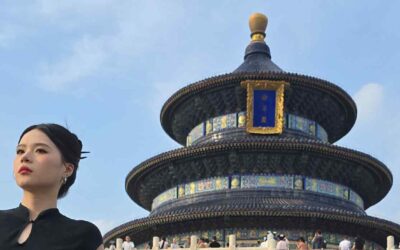
Imperial Processions to the Temple of Heaven
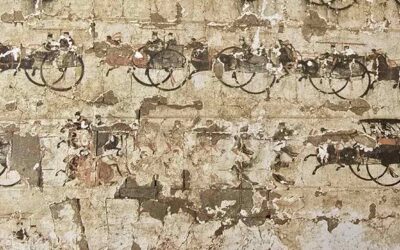
Imperial Processions to the Temple of Heaven Those who know China—even if only through a brief trip—and who have visited the Temple of Heaven in Beijing will surely have been fascinated by the sober beauty of its buildings. Yet, whether on a crowded day or during a...
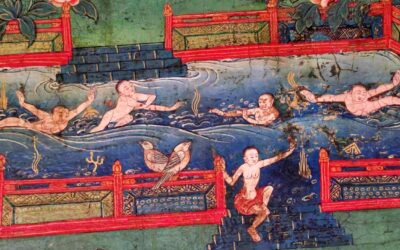
Most Frequent Scenes from the Life of the Buddha in Tibetan Art
Most Frequent Scenes from the Life of the Buddha in Tibetan Art In fact, only a few moments are repeated very frequently in Tibetan paintings. In some versions there are eight—an auspicious number for Tibetans, corresponding to the Noble Eightfold Path and the eight...
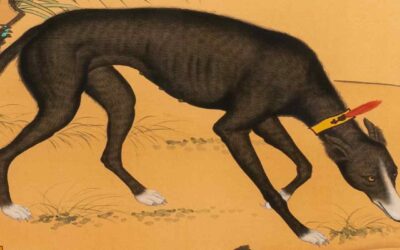
The Dog as Psychopomp in China
The Dog as Psychopomp in China One of the oldest human beliefs was that after death there existed an immaterial part of the person—later called the soul or spirit—that did not disappear with the body. Its origin may lie in the “presence” of the dead in dreams,...
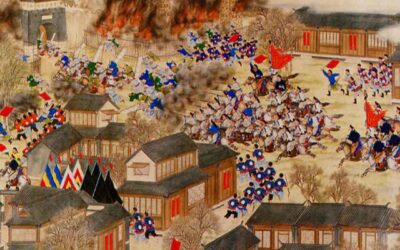
An ambitious project to rewrite history
An ambitious project to rewrite history. It is what we see in Lhamsuren Munkh-Erdene, The Nomadic Leviathan. A Critique of the Sinocentric Paradigm. Brill. Leiden. 2023. Now free to download in the publisher’s webpage. This book is a critique of a theoretical paradigm...
Why I devoted more than a year to researching suicide in Chinese culture
Why I devoted more than a year to researching suicide in Chinese culture In early November 2022 my friend, the psychiatrist Luz González Sánchez, told me that she was preparing a lecture on suicide. On the 8th of that same month, during a quiet moment, I made a brief...

The Tibetan Deity with a Horse Face
The Tibetan Deity with a Horse Face During my most recent journey to Tibet, someone pointed out to me in a temple a deity who bore a small horse upon his head. I knew that this protector is called Hayagriva, and that he is sometimes referred to as “Horse-Headed” or...