


Imperial Processions to the Temple of Heaven
Those who know China—even if only through a brief trip—and who have visited the Temple of Heaven in Beijing will surely have been fascinated by the sober beauty of its buildings. Yet, whether on a crowded day or during a quiet season, it is difficult to imagine it in all its splendor when it became the setting for imperial ceremonies.
The description of one of these ceremonies will help us to picture it:
«This imperial procession was headed by twenty-four drummers, and as many trumpeters: next to them were an equal number of men armed with red varnished staves, seven or eight feet long, and adorned with golden foliage. Then followed one hundred soldiers carrying halberds, ending in a crescent and gilded at the end; then four hundred great lanterns finely adorned, and four hundred torches made of wood, which burn for a long time, and yield a great light; two hundred spears, some set off with flowing silk of various colors, others with tails of panthers, foxes, and other animals; twenty-four banners, painted with the signs of the zodiac, fifty-six banners, exhibiting the fifty-six constellations into which all the stars are divided; two hundred fans, supported by long gilded sticks, painted with figures of dragons, birds, and animals ; twenty-four umbrellas, richly adorned; and a beaufet, carried by officers of the kitchen, and furnished with gold utensils, such as basins, ewers, etc.
The emperor followed on horseback, with a grave majestic air, pompously dressed; on each side of him was carried a rich umbrella, large enough to shade both him and his horse. He was surrounded with ten white horses, led, whose saddles and bridles were enriched with gold and precious stones; one hundred spearmen, and the pages of the bed-chamber. After this appeared, in the same order, the princes of the blood, the kings, the principal mandarins, and the lords of his court, in their habits of ceremony; five hundred young gentlemen belonging to the palace; one thousand footmen in red gowns, embroidered with flowers, and stars of gold and silver. Then thirtysix men carried an open chair, followed by another that was close and much larger, supported by one hundred chairmen.
Lastly, came four large chariots, two drawn by elephants, and two by horses, covered with embroidered housings ; each chair and chariot had one hundred and fifty men following it for its guard. The procession was closed by two thousand civilians, and as many military mandarins, in magnificent habits of ceremony.
Henrietta SHUCK. Scenes in China: or, sketches of the country, religion and customs of the Chinese. T. Nelson and sons, 1852.
About me: I have spent 30 years in China, much of the time traveling and studying this country’s culture. My most popular research focuses on Chinese characters (Chinese Characters: An Easy Learning Method Based on Their Etymology and Evolution), Matriarchy in China (there is a book with this title), and minority cultures (The Naxi of Southwest China).


Last posts
Laozi’s Mother is the goddess who created the world
Laozi’s Mother is the goddess who created the world In Taoist thought, great mysteries are not explained with definitive statements, but with paradoxical images, fragmentary myths, and bodily metaphors. One such mystery is the origin of the world—and for Taoism, that...
Does the Daodejing Contain the Oldest Creation Myth of China?
Does the Daodejing Contain the Oldest Creation Myth of China? An introductory article on Chinese mythology asserts (twice) that the myth of the creation of Huangdi (the Yellow Emperor) should be considered one of China's creation myths, following the model of...
The Wenzi Begins: Echoes from a Forgotten Taoist Voice
The Wenzi Begins: Echoes from a Forgotten Taoist Voice The Wenzi (文子) is an ancient Daoist text attributed to a disciple of Laozi. Although its authenticity has been debated throughout history, its content clearly reflects the Daoist worldview and its influence on the...
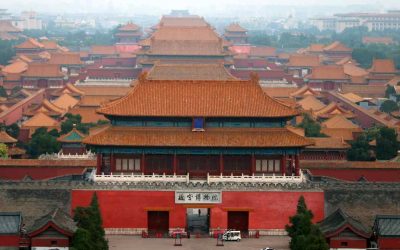
A Humble Proposal for Rethinking Historical Periodization: To Go Beyond Dynasties in Chinese History
A Humble Proposal for Rethinking Historical Periodization: To Go Beyond Dynasties in Chinese History Historical narratives are never neutral. The way we divide time reflects not only the facts we choose to remember, but also the frameworks we use to interpret them. In...
The Primitivist: The Taoist Philosopher of Simplicity
The Primitivist: The Taoist Philosopher of Simplicity The Taoist classic Zhuangzi is not the work of a single philosopherAnyone who takes a closer look at the foundational works of Taoism will quickly discover that the book known as Zhuangzi was not entirely written...

Zhang Yongzheng, the master of deluding reality
Zhang Yongzheng, the master of deluding reality Reality is an illusion, say Buddhist texts. And each of Zhang Yonggzheng's (Gansu, 1978) works plays with this concept to remind us again and again that there is no immutable reality but a fluid universe of forms that...