


Imperial Processions to the Temple of Heaven
Those who know China—even if only through a brief trip—and who have visited the Temple of Heaven in Beijing will surely have been fascinated by the sober beauty of its buildings. Yet, whether on a crowded day or during a quiet season, it is difficult to imagine it in all its splendor when it became the setting for imperial ceremonies.
The description of one of these ceremonies will help us to picture it:
«This imperial procession was headed by twenty-four drummers, and as many trumpeters: next to them were an equal number of men armed with red varnished staves, seven or eight feet long, and adorned with golden foliage. Then followed one hundred soldiers carrying halberds, ending in a crescent and gilded at the end; then four hundred great lanterns finely adorned, and four hundred torches made of wood, which burn for a long time, and yield a great light; two hundred spears, some set off with flowing silk of various colors, others with tails of panthers, foxes, and other animals; twenty-four banners, painted with the signs of the zodiac, fifty-six banners, exhibiting the fifty-six constellations into which all the stars are divided; two hundred fans, supported by long gilded sticks, painted with figures of dragons, birds, and animals ; twenty-four umbrellas, richly adorned; and a beaufet, carried by officers of the kitchen, and furnished with gold utensils, such as basins, ewers, etc.
The emperor followed on horseback, with a grave majestic air, pompously dressed; on each side of him was carried a rich umbrella, large enough to shade both him and his horse. He was surrounded with ten white horses, led, whose saddles and bridles were enriched with gold and precious stones; one hundred spearmen, and the pages of the bed-chamber. After this appeared, in the same order, the princes of the blood, the kings, the principal mandarins, and the lords of his court, in their habits of ceremony; five hundred young gentlemen belonging to the palace; one thousand footmen in red gowns, embroidered with flowers, and stars of gold and silver. Then thirtysix men carried an open chair, followed by another that was close and much larger, supported by one hundred chairmen.
Lastly, came four large chariots, two drawn by elephants, and two by horses, covered with embroidered housings ; each chair and chariot had one hundred and fifty men following it for its guard. The procession was closed by two thousand civilians, and as many military mandarins, in magnificent habits of ceremony.
Henrietta SHUCK. Scenes in China: or, sketches of the country, religion and customs of the Chinese. T. Nelson and sons, 1852.
About me: I have spent 30 years in China, much of the time traveling and studying this country’s culture. My most popular research focuses on Chinese characters (Chinese Characters: An Easy Learning Method Based on Their Etymology and Evolution), Matriarchy in China (there is a book with this title), and minority cultures (The Naxi of Southwest China).


Last posts

The dog in China’s ancient tombs
Pedro Ceinos Arcones. La Magia del perro en China y el mundo. Dancing Dragons Books. 2019. (Excerpts from the book) The dog in China’s ancient tombs In China, dogs buried with their owners have been discovered in archaeological sites belonging to the most important...
Some philosophical schools in Buddha’s times
Peter Harvey. Buddhism: Teachings, History and Practices. Cambridge University Press. 2013. (Excerpts from the book. Page 11 and ff.) In its origin, Buddhism was a Samana-movement. Samanas were wandering ‘renunciant’ thinkers who were somewhat akin to the early Greek...
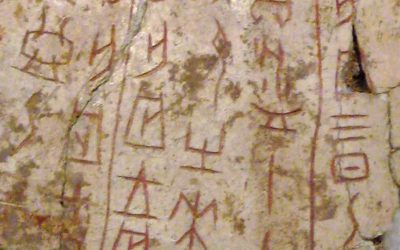
The origin of Chinese characters
The origin of Chinese characters in John C. Didier, “In and Outside the Square,” Sino-Platonic Papers, 192, vol. 1 (September, 2009) The technology of writing appears suddenly and morphologically fully developed on Shang oracle bones and, later, bronzes at about the...
The sacred Taishan mountain
Taishan Mountain, life and death in Chinese culture, according to the work of Edouard Chavannes Mountains are, in China, divinities. They are considered as nature powers who act in a conscious way and who can, therefore, be made favourable by sacrifices and touched...
A Taoist exorcism séance
'My friend is going to conclude an exorcism service this morning and, if you are really so interested, he hopes you can come and witness it.' He paused uncertainly. 'But I must warn 86 you that it is not a pretty sight. Really it is most unpleasant, disgusting and...
Chinese superstitions before the birth
To have five sons, rich, vigorous, literate and who become mandarins: this is the ideal of any Chinese family. From this matrix idea emerged the various types of popular images that are displayed in all households: Wu Zi Deng Ke (五子登科), Have five official children!...