


Funeral Masks of the Zhuang people in nationalities Museum of Kunming
Known as Longyawai Masks, they are funeral ceremony masks popular in the Zhuang communities of Wenshan Autonomous Prefecture, on the east of Yunnan Province.
The masks are shaped as a lion, they are in fact a cow head called «Longyawai», a gift given by the living to the dead, symbolizing that is a real cow for feeding them in the afterlife. The purpose is to let the dead live a carefree life in underworld with no concern of the human world.
These masks are made of paper pasted on a bamboo frame and are used together with two grim face masks.
Three people wear the three masks to dance on the day commemorating the dead and the following day for the funeral procession.

The museum exhibits three large masks, one with a lion’s head, one cow’s head and one with a shepherd’s head. They are very elaborate and of complex design, with huge mouths, eyes like round mirrors, and sometimes with fabrics hanging to cover the wearer. There are two smaller and simpler ones, one with the face of a monkey, used by the companions in the procession.
Yunnan Nationalities Museum, in Kunming, has one of the best collections of masks in China.
References:
–Masks in the Yunnan Nationalities Museum. Download the free book.


Last posts
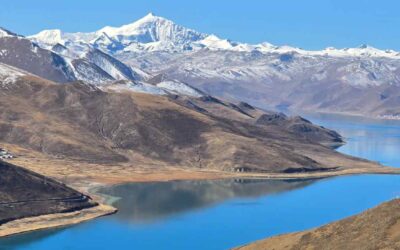
The Beauty of Yamdrok Lake
The Beauty of Yamdrok Lake Yamdrok Lake is one of the four most important sacred lakes in Tibet, the one closest to the capital and the most frequently visited. Fan-shaped and opening toward the south, it stretches about 130 km from east to west and 70 km from north...
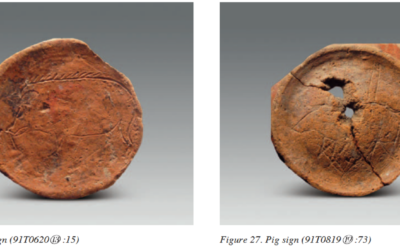
The Shuangdun Signs and the Origins of Chinese Writing
The Shuangdun Signs and the Origins of Chinese Writing When the origins of Chinese writing are discussed, attention almost always turns to the oracle bones of the Shang dynasty. Yet thousands of years before characters were carved onto turtle plastrons, surprisingly...
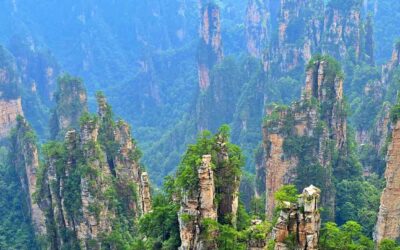
Zhangjiajie: The Sublime Landscape of the Film Avatar
Zhangjiajie: The Sublime Landscape of the Film Avatar Zhangjiajie is now one of my favorite destinations in China. Not only does it boast some of the country’s most spectacular landscapes, but in recent years it has continued to work on turning these places into...