


Discover the Treasure of Weibaoshan Mountain in Yunnan
Weibao Mountain (巍宝山) is one of the sacred mountains of Yunnan. Within its relatively small area it brings together a historical, artistic, natural, and monumental ensemble that makes it a unique place in China and perhaps in the world. It houses one of the country’s most important collections of religious painting (in the Changchun Cave and other temples), a significant group of Taoist temples spread across its upper slopes, a magnificent natural environment, and the distinction of having been the birthplace of one of the most prosperous southern Chinese kingdoms—the Kingdom of Nanzhao—which, under this or another name, ruled Yunnan from approximately the 7th to the 13th centuries.
Despite its artistic and natural grandeur and its historical importance, Weibao Mountain has remained largely unknown to travelers. Tourism promotion has only brought about a slow process of monument restoration that is still unfinished. Visiting it today remains a sublime spiritual experience, transporting the traveler to natural and religious settings that have disappeared elsewhere—settings that in the past helped Taoist believers transcend the coarse experiences of this world and attain wisdom and spiritual enlightenment.
The Most Famous Taoist Mountain in Yunnan
Weibao Mountain (shan in Chinese means “mountain”) is the most famous Taoist mountain in Yunnan Province and one of the fourteen sacred mountains of this religion. Its name, which can be translated as “The Mountain of Wei’s Treasure,” alludes to an ancient belief that the mountain itself was a treasure. It is not clear whether this “treasure” referred to its natural singularities—some say it resembles an ingot—its geographical position protecting the city of Weishan at its feet, or the perception since ancient times of its special qualities for people’s spiritual development.
It is located about 10 kilometers southeast of the city of Weishan (called Menghua until the mid-20th century), and 51 km from Dali, in Yunnan Province. It covers an area of 19.4 square kilometers, with Taiji Peak to the south, the Yanggua River to the west, the Wudo River to the east, and the Dali Doucang Mountains to the north. About twenty Taoist palaces and temples are still preserved on Weibaoshan, distributed along its slopes according to religious principles, forming several religious centers that together create a vast architectural complex. Its shape is said to resemble a crouching lion turning its head to look at the city.
A Natural Treasure of Plants and Animals
Weibao Mountain is not only a Taoist sacred site but also a natural treasure of flora and fauna. It is reached by a gently rising road offering magnificent views of the streams and rice paddies surrounding the city. The mountain preserves lush vegetation, with more than 300 kinds of rare plants, including an alpine quebracho that has been growing for over 1,000 years, a group of cypresses planted in the Ming dynasty, a 45-meter-tall Huashan pine known as the “King of Trees,” and the tallest ancient camellia in the world, over 300 years old and 17.5 meters high. There are also orchids, magnolias, camellias, and many other valuable flowers and trees, nearly 100 kinds of medicinal herbs, and more than 20 kinds of mushrooms. Its fauna includes foxes, civets, flying squirrels, green pigeons, and other rare birds and animals.
A Pearl of Traditional Chinese Architecture
The Taoist complex on Weibao Mountain is one of the pearls of traditional Chinese architecture and reflects Taoist wisdom in many ways—especially the concept of harmony between Heaven and humankind and the exploration of the “Tao of Nature.” Among its ancient buildings, the Cave of Eternal Spring, with its Eight Trigrams layout and hundreds of paintings, is the greatest treasure and at the same time the most colorful, largest, and most representative temple. The Jade Emperor Pavilion, built in terraces ascending the mountain, occupies the largest area. Qingxia Temple is magnificent in scale, and the “Song under the Pine” paintings in the Wenchang Palace are of incalculable value.
Birthplace of the Kingdom of Nanzhao
The mountain was also the birthplace of the ancient Kingdom of Nanzhao, which for three centuries (7th to 10th centuries) ruled most of Yunnan Province, as it was here that its first king, Xinuluo, rose to power. After decades of political disorder, Nanzhao was succeeded by the Kingdom of Dali (10th to 13th centuries), maintaining political, religious, and cultural continuity.
Read the Book for Free
This is the beginning of the book by Pedro Ceinos Arcones, The Pilgrimage That Leads to the Heavens: Weibaoshan Mountain. You can read or download the complete book for free on archive.org.
You can also join one of our trips to Yunnan or Yunnan and Tibet (there is a guaranteed departure on August 2). All of them visit this incredible mountain.
About me: I have spent 30 years in China, much of the time traveling and studying this country’s culture. My most popular research focuses on Chinese characters (Chinese Characters: An Easy Learning Method Based on Their Etymology and Evolution), Matriarchy in China (there is a book with this title), and minority cultures (The Naxi of Southwest China).


Last posts
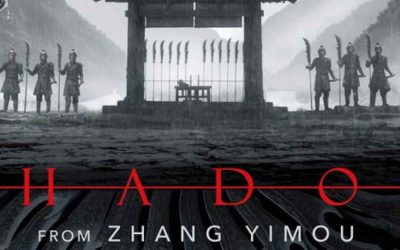
Shadow – A Film by Zhang Yimou
Shadow - A Film by Zhang Yimou Zhang Yimou leads one of the most consistent and brilliant careers in the cinematography of China, and with The Shadow (Ying) he delights the viewer again with a beautiful and surprising story, based on a very original script, and that...
The horse in the Chinese horoscope
The horse in the Chinese horoscope The horse is one of the animals of later incorporation into Chinese culture. If, as some scholars say, the system of 12 animals in the Chinese horoscope originated in the peoples who lived in the north, in the steppes and deserts...
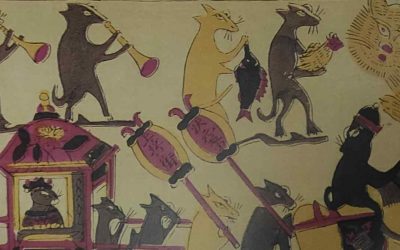
The rat in the Chinese horoscope
The rat in the Chinese horoscope The rat for the Chinese is an animal to which are associated some positive and some negative qualities, in fact it is considered capable of carrying out numerous enterprises, not in vain it was the first animal to be assigned a sign of...
An oriental interpretation of dreams
An oriental interpretation of dreams Last week, in a book about the Hani minority in the remote Jinping region, one of the authors devoted part of his article on divination to dream interpretation among the Hani. I translated it, added some comments and published it...
What does it mean to dream of a cow in China? We tell you here
What does it mean to dream of a cow in China? We tell you here In the last few days I have stumbled upon several documents dealing with dreams in China, and some with certain fragments explaining, in particular, the meaning of dreaming about a cow. One of the most...
The ox and the ritual plow in springtime
The ox and the ritual plow in springtime Throughout the imperial era, every year the beginning of agricultural work was celebrated by a solemn ceremony called the Plowing Festival. "The emperor himself would take a yellow plow attached to a yellow ox (yellow was the...