


Chinese Herbal Medicine Shop in Weishan, Yunnan
China still maintains a strong tradition of using natural medicines, specifically herbs with medicinal properties that have been used for centuries. In addition to being present in the composition of many modern medications, some herbalists continue their traditional trade. Even in large cities, it is not uncommon to occasionally find herbalists selling fifteen or twenty products in their small stall or shop, each stored in a plastic bag. Usually, these products do not have labels, meaning that only an expert knows exactly what each medicine is.
Herbal medicine shop
In this shop, located in the ancient city of Weishan in Yunnan province, we find what could be described as the pinnacle of Chinese herbal medicine. Within this traditional house on the main street of the old town, we discover a unique display of medicinal herbs. On the left, some medicines are neatly arranged in white plastic bags, this time identified with small labels. Higher up, in a small nod to modern civilization, others are carefully placed in plastic bottles.
A unique shop in China
However, what makes this shop stand out from all the other similar stores and stalls across China is the sheer volume of herbs stored in the white and green sacks seen on the right side of the image. It is well known that each medicinal herb must be harvested at a specific time of the year and that many of these herbs are needed in large quantities to be therapeutically effective. The foresight of this traditional pharmacist creates a truly unique scene in the ancient city of Weishan.
Wonderful Weishan Old City
Weishan is one of the oldest cities in Yunnan province. Officially designated as an autonomous district for the Yi and Muslim communities within the Bai Autonomous Prefecture of Dali, Weishan boasts significant historical, artistic, and cultural attractions. Among them, the Ancient City, with thousands of well-preserved buildings, and Weibaoshan Mountain, located 10 km from the city, stand out as the most important Taoist mountain in Yunnan.
This is why we include this city in almost all of our itineraries in Yunnan.


Last posts
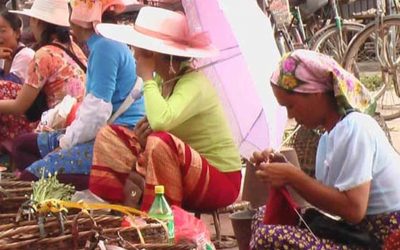
The sacred forests of the Dai
The sacred forests of the Dai: Protecting the ancestors - protecting nature. Among the indigenous peoples that inhabit the south of China, there are a good number that have near their villages a small grove that they consider sacred. Usually they believe that this...
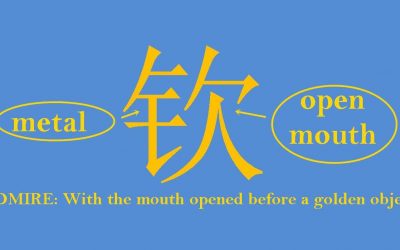
Chinese character 钦 qin – admire
Chinese character 钦 qin – admire. 1. Admire 2. Respect HSK -6 STROKES - 9 RADICAL - 钅Elements ---- Open mouth 欠 + metal 钅. Phonetic series 欠. A person with the mouth opened 欠 before a metallic 钅 (jīn phonetic) or golden object.钦佩 qīnpèi - admire; esteem. 钦慕 qīnmù...
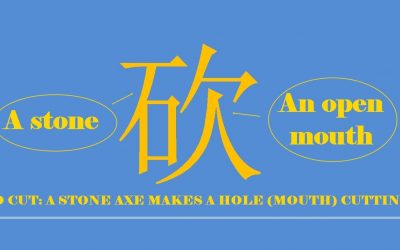
Chinese character 砍 kǎn – cut
砍 kǎn – cut Main meanings: ① cut, chop ② cut down HSK - STROKES - 5 RADICAL - 石 Etymology: Elements ---- Open mouth 欠 + stone 石. Phonetic series 欠. A stone 石 knife that leaves a void 欠 when cutting. Main Words: 砍柴 kǎnchái cut firewood. Discussion and sources More...
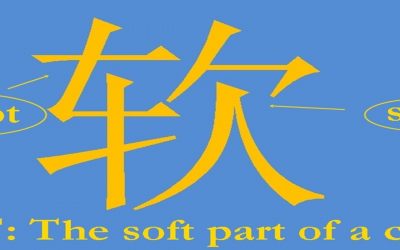
Chinese character 软 ruǎn – soft; flexible
Main meanings: ① soft, weak ② flexible ③ timid HSK - STROKES - 8 RADICAL - 车 Etymology: Elements ---- The soft 欠 part + a car 车. Phonetic series 欠. The soft 耎 (as the beard 而 of a man 大 changed to 欠), part of a chariot 车. Here soft 欠 replaces an old character...