

Now is the time to ask him something about Taoism, I decided, and I poured out my questions. He looked up at me with his innocent, childish eyes, his smile gentle but, I thought, slightly ironical.
‘Take time, observe and learn,’ he said simply. ‘Words spoken in haste will not stick; a cup of water splashed into a parched field will do it no good. It is only a slow and gentle rain that will saturate the soil and produce life.’ He became silent ready to resume his work.
His rebuke abashed me. I saw what he meant. He probably thought I was an idle tourist, or worse, a young writer, who wanted to learn something about Taoism in an hour or so, and then write a smart article, boasting of the mysteries revealed to him. Seeing my obvious confusion, the old man relented. His face was all smiles now, but his eyes became thoughtful.
‘If you want to learn about the Eternal Tao, do not be casual and in a hurry. Don’t glean too much from too many books, for each book is full of opinions, prejudices and corruptions.
Read only one book and only one—our Old Master’s Taoteking, and then try to understand it, not by juggling the words and meanings, but intuitively, through your heart and spirit. Don’t ask too many questions, but patiently watch what we Taoists do, and perceive the hidden motives of our actions, and not that which is only for display.
Do not be guided so much by your intellect as by faith, love and your heart, which is another name for understanding and compassion. What you need is wisdom, and not knowledge; for if one has wisdom, knowledge will come naturally. Always remember that the Eternal Tao is Infinite Wisdom, Infinite Love and Infinite Simplicity.’ And with this the old man took up his pickaxe and resumed his hoeing of the bush.
From: Peter Goullart. The monastery of Jade Mountain. 1961
More posts on Chinese culture
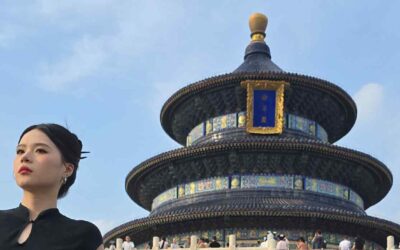
Imperial Processions to the Temple of Heaven
Imperial Processions to the Temple of Heaven Those who know China—even if only through a brief trip—and who have visited the Temple of Heaven in Beijing will surely have been fascinated by the sober beauty of its buildings. Yet, whether on a crowded day or during a...
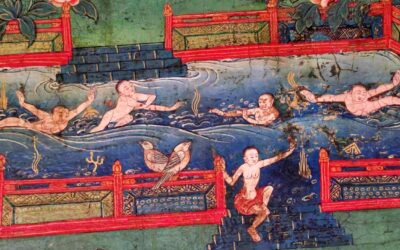
Most Frequent Scenes from the Life of the Buddha in Tibetan Art
Most Frequent Scenes from the Life of the Buddha in Tibetan Art In fact, only a few moments are repeated very frequently in Tibetan paintings. In some versions there are eight—an auspicious number for Tibetans, corresponding to the Noble Eightfold Path and the eight...
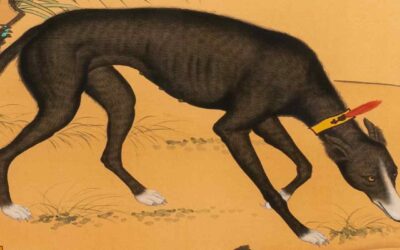
The Dog as Psychopomp in China
The Dog as Psychopomp in China One of the oldest human beliefs was that after death there existed an immaterial part of the person—later called the soul or spirit—that did not disappear with the body. Its origin may lie in the “presence” of the dead in dreams,...
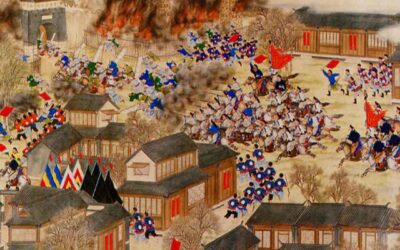
An ambitious project to rewrite history
An ambitious project to rewrite history. It is what we see in Lhamsuren Munkh-Erdene, The Nomadic Leviathan. A Critique of the Sinocentric Paradigm. Brill. Leiden. 2023. Now free to download in the publisher’s webpage. This book is a critique of a theoretical paradigm...
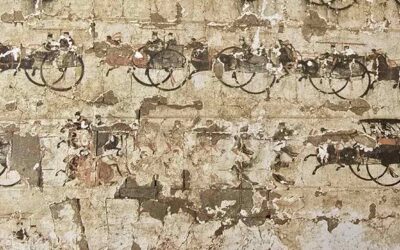
Why I devoted more than a year to researching suicide in Chinese culture
Why I devoted more than a year to researching suicide in Chinese culture In early November 2022 my friend, the psychiatrist Luz González Sánchez, told me that she was preparing a lecture on suicide. On the 8th of that same month, during a quiet moment, I made a brief...

The Tibetan Deity with a Horse Face
The Tibetan Deity with a Horse Face During my most recent journey to Tibet, someone pointed out to me in a temple a deity who bore a small horse upon his head. I knew that this protector is called Hayagriva, and that he is sometimes referred to as “Horse-Headed” or...
More posts on China ethnic groups
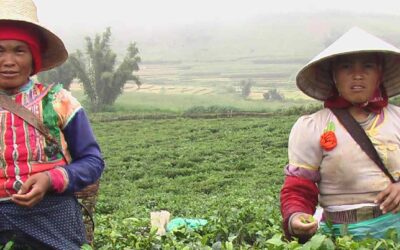
The Bull that Shaped the World and Other Sacred Bovines among the Bulang Minority
The Bull that Shaped the World and Other Sacred Bovines among the Bulang Minority The Bulang people (布朗族), an Austroasiatic ethnic group primarily inhabiting Yunnan’s tea-growing highlands, revere the ox as a sacred being intertwined with creation, agriculture, and...
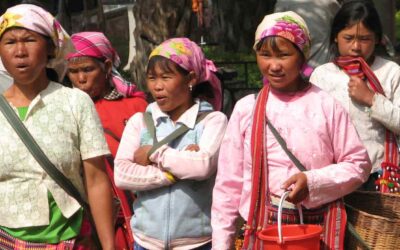
The Lahu Matriarchy: An Egalitarian Dyadic Society in China
The Lahu Matriarchy: An Egalitarian Dyadic Society in China From the book: Mothers, Queens, Goddesses, Shamans: Matriarchy in China (Miraguano, Madrid, 2011) The egalitarian society of the Lahu drew academic attention with Du Shanshan’s study Chopsticks Only Work in...
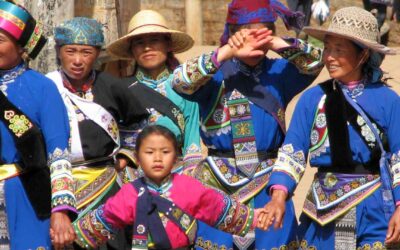
An Old Book on the Sani-Yi Minority
An Old Book on the Sani-Yi Minority One may wonder whether it makes any sense to read, in the first decades of the 21st century, a book written at the end of the 19th. Clearly, the person who has spent some of their time translating it, revising it, updating the old...
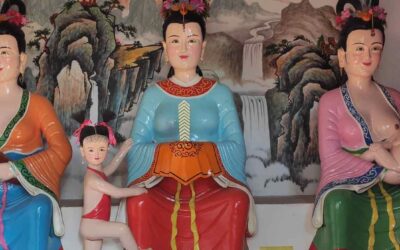
Sexual aspects of Gu venom
Gu illness resulted from a contamination by gu poison, which a recent analyst has characterized as “an alien evil spirit which entered [the] body and developed into worms or some similar animal that gnawed away at the intestines or genitalia.” This poison was thought...
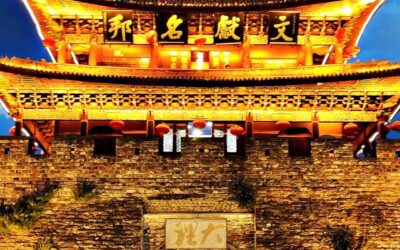
Sunset in Dali
No Words Fuxing Rd from the South Gate. Dali, Yunnan.Corner in Fuxing Rd, Dali, Yunnan.Night market at the south of the South Gate. Dali. YunnanLast posts
The five secret temples of the lamas in Lijiang
The five secret temples of the lamas in Lijiang Religions of Lijiang Although the city of Lijiang is known primarily for the Dongba religion practiced by the traditional shamans of the Naxi, also called Dongba, who with their rituals administered the religious and...