

On the left side was a densely wooded rocky hill. Its steep slope was carved into fantastic figures of unicorns, leogryphs and other mythological animals, and statues of gods and saints. They had been fashioned out of rock by the monks more than fifteen centuries ago. Under the hill were grottoes and caves filled with Buddhas and genii, where pilgrims were burning incense. Mantras in Sanskrit and archaic Chinese adorned the rocks, chiselled by the long departed hermits.]
Walking a little farther we came to the spacious entrance hall of a monastery which was unique in China in its grandeur, sanctity.
‘The Monastery of the Spirit’s Retreat’, softly exclaimed Chungan pointing to the three huge golden characters over the wide-open doors of the hall.
‘What a deep and secret meaning these words possess ! ‘ he continued. ‘It is a fitting name for this place, for it is difficult to conceive a better hermitage for the spirit of a man tired of the world and seeking concealment amidst the beautiful and tranquil.
Having emerged from this hall with its golden statue of Maitreya, the Lord Buddha of the Future, we stepped out into a large stone-flagged courtyard bounded by ancient trees. In front of them, on a high stone platform, flanked by two small pagodas and with a massive bronze incense burner in the middle, stood the main temple hall. its great height and immense size dwarfed all other buildings around it. The roof rose in three nobly curved tiers supported by colossal red wooden pillars.
The latticed gates of the hall were open as we came in. A mysterious semi-darkness, heavy with the odour of sandal-wood incense, pervaded the place. Right in the middle of the vast temple sat three golden Buddhas of such unbelievable majesty and of such gigantic proportions that when I saw them I was astonished. The images rested on lotus flowers which, in turn, were supported by stupendous stone pedestals. A colossal lantern, richly carved and decorated, with a perpetually-burning oil-lamp within, was suspended in front of the Trinity.
The central figure was that of the Lord Buddha himself with his royal coiffure and a sign of urna on his forehead. With the eyes turned inwards, gazing not at the world outside before him but at the world within himself; with his enigmatic smile, he sat there a true image of the man that he once was, but who had transcended all human emotions, desires, all suffering and mundane joy; who had found the lost path to Heaven and shown it to suffering mankind, and who at last had entered Nirvana and became himself a God. I gazed enchanted at the mystic statue. I felt mesmerized by the utter stillness of the temple. Clouds of incense floated in spirals towards the lofty ceiling and gently dissolved there in the golden rays of the sun coming through the narrow windows. The very silence was pregnant with the meaning of things unsaid, of prayers uttered and of petitions yet unoffered.
After we had finished our tour of the golden statues of arhats, lining the walls, and paused before an enormous image of the gentle Goddess Kwanyin, which stood against an altar piece representing the Western Paradise, we made our exit by a side door into a commodious guest hall where a young novice brought us cups of the monastery’s own tea. He smiled at Chungan and Tsungpoo, evidently recognizing them as frequent visitors. After a good rest we were ready to proceed to the next famous temple.
Goullart, Peter. Monastery of the Jade Mountain.
Peter Goullart. The monastery of Jade Mountain.
More posts on Chinese culture
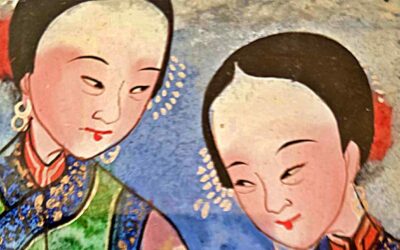
Suicides en the east suicides in the west
In early November 2022, my friend, the psychiatrist Luz González Sánchez, told me she was preparing a presentation on suicide. On the 8th of that month, during a quiet moment, I briefly reviewed some of the types of suicide characteristic of China and sent it to her...
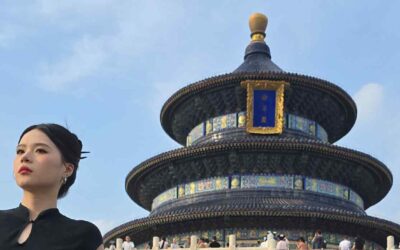
Imperial Processions to the Temple of Heaven
Imperial Processions to the Temple of Heaven Those who know China—even if only through a brief trip—and who have visited the Temple of Heaven in Beijing will surely have been fascinated by the sober beauty of its buildings. Yet, whether on a crowded day or during a...
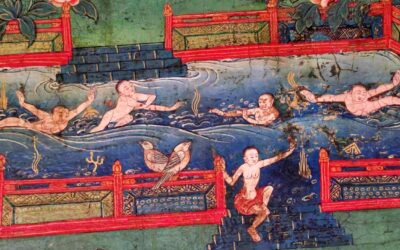
Most Frequent Scenes from the Life of the Buddha in Tibetan Art
Most Frequent Scenes from the Life of the Buddha in Tibetan Art In fact, only a few moments are repeated very frequently in Tibetan paintings. In some versions there are eight—an auspicious number for Tibetans, corresponding to the Noble Eightfold Path and the eight...
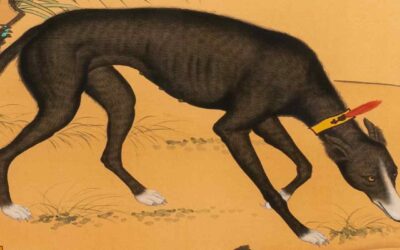
The Dog as Psychopomp in China
The Dog as Psychopomp in China One of the oldest human beliefs was that after death there existed an immaterial part of the person—later called the soul or spirit—that did not disappear with the body. Its origin may lie in the “presence” of the dead in dreams,...
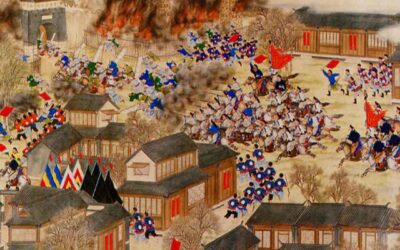
An ambitious project to rewrite history
An ambitious project to rewrite history. It is what we see in Lhamsuren Munkh-Erdene, The Nomadic Leviathan. A Critique of the Sinocentric Paradigm. Brill. Leiden. 2023. Now free to download in the publisher’s webpage. This book is a critique of a theoretical paradigm...
Why I devoted more than a year to researching suicide in Chinese culture
Why I devoted more than a year to researching suicide in Chinese culture In early November 2022 my friend, the psychiatrist Luz González Sánchez, told me that she was preparing a lecture on suicide. On the 8th of that same month, during a quiet moment, I made a brief...
More posts on China ethnic groups
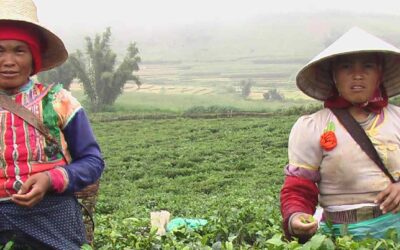
The Bull that Shaped the World and Other Sacred Bovines among the Bulang Minority
The Bull that Shaped the World and Other Sacred Bovines among the Bulang Minority The Bulang people (布朗族), an Austroasiatic ethnic group primarily inhabiting Yunnan’s tea-growing highlands, revere the ox as a sacred being intertwined with creation, agriculture, and...
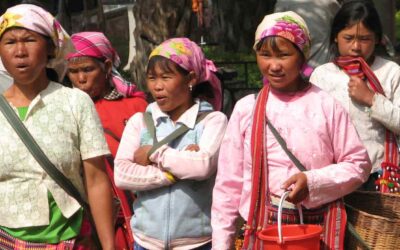
The Lahu Matriarchy: An Egalitarian Dyadic Society in China
The Lahu Matriarchy: An Egalitarian Dyadic Society in China From the book: Mothers, Queens, Goddesses, Shamans: Matriarchy in China (Miraguano, Madrid, 2011) The egalitarian society of the Lahu drew academic attention with Du Shanshan’s study Chopsticks Only Work in...
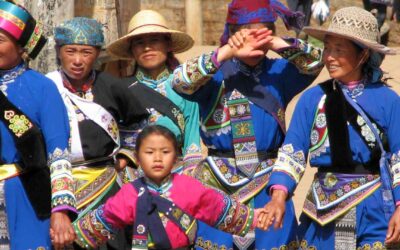
An Old Book on the Sani-Yi Minority
An Old Book on the Sani-Yi Minority One may wonder whether it makes any sense to read, in the first decades of the 21st century, a book written at the end of the 19th. Clearly, the person who has spent some of their time translating it, revising it, updating the old...
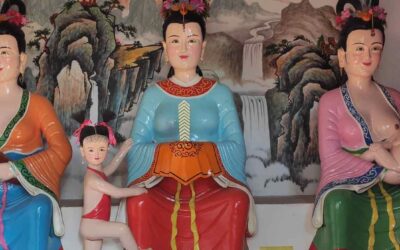
Sexual aspects of Gu venom
Gu illness resulted from a contamination by gu poison, which a recent analyst has characterized as “an alien evil spirit which entered [the] body and developed into worms or some similar animal that gnawed away at the intestines or genitalia.” This poison was thought...
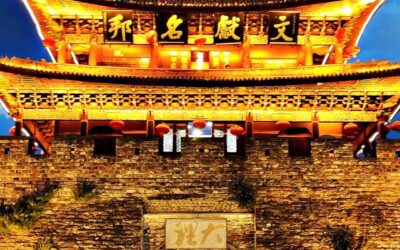
Sunset in Dali
No Words Fuxing Rd from the South Gate. Dali, Yunnan.Corner in Fuxing Rd, Dali, Yunnan.Night market at the south of the South Gate. Dali. YunnanLast posts
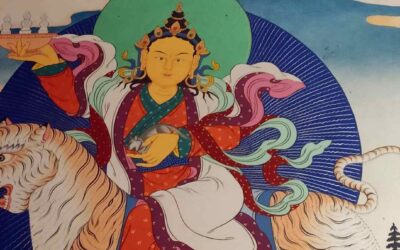
The five secret temples of the lamas in Lijiang
The five secret temples of the lamas in Lijiang Religions of Lijiang Although the city of Lijiang is known primarily for the Dongba religion practiced by the traditional shamans of the Naxi, also called Dongba, who with their rituals administered the religious and...